Mold on Mattress: Signs You Have It and How To Remove It


Key Takeaways
- Mold can create dark spots that are fuzzy or slimy and have a musty smell. It can also exacerbate bedroom allergies and respiratory symptoms.
- Maintain low humidity levels and ensure proper ventilation in your bedroom to prevent moisture buildup that fosters mold growth.
- Use a breathable, slatted bed frame and a waterproof mattress protector to promote airflow and shield your mattress from spills and excess moisture.
- Regularly air out your mattress, clean spills immediately, and keep bedding dry and well-ventilated to reduce the risk of mold developing over time.
Mold on mattresses is more likely to develop when there's humidity or insufficient airflow.1 Typically, you’ll be able to notice an unpleasant smell, spots, or fuzzy growth — but how do you determine if these instances are mold growth or something else?
The telltale signs of mold include black or green spots that are fuzzy or slimy and are typically accompanied by a musty smell.2 Understanding how to store a mattress and controlling humidity levels are key to preventing mold growth.
If you’re ready to take control of mold issues, our guide below has all the information you need. Learn more about how to spot mold on a bed, the difference between mold and mildew, and tips on how to get rid of black spots on a mattress.

Protect Your Mattress
The Purple Waterproof Mattress Protector protects your mattress from water, dust mites, and dander to enhance your comfort and sleep quality.
What Does Mold on a Mattress Look Like?
Knowing what mold looks like and understanding the differences between mold vs. mildew is key to recognizing signs of a bad mattress. Mildew appears as white or gray fuzzy patches and is generally less dangerous than mold on a mattress. Mold is darker and more harmful.
Here's what to look for to identify mattress mold and distinguish it from other issues.
Spots
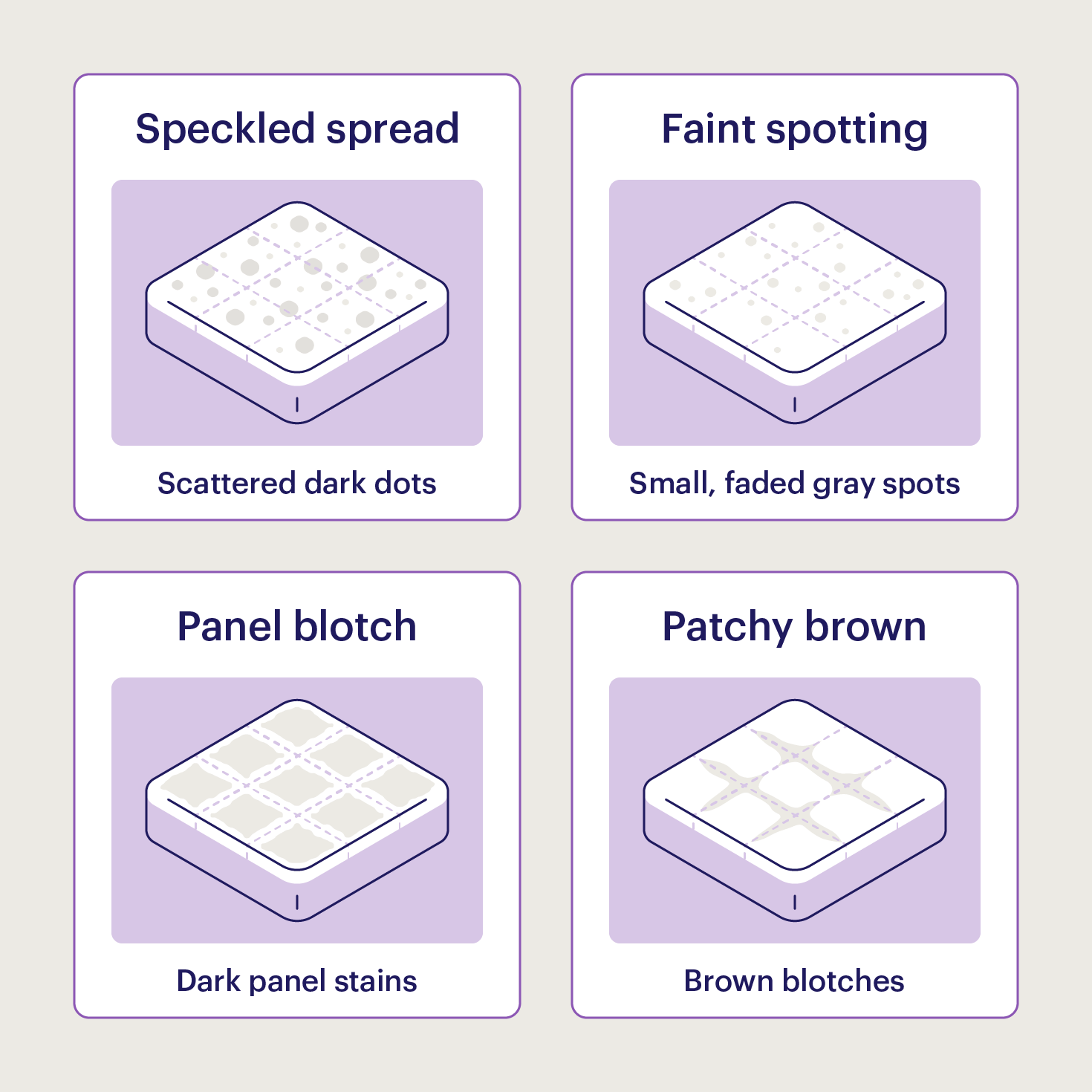
Mold can cause the mattress material to turn a different color. Look for dark spots that are irregular. The most frequently seen mold on mattresses is black mold. Early-stage black mold on mattresses indicates ongoing moisture problems. Other common colors include blue or green molds.
Purple molds are less common but still seen in some cases. Mold can also cause yellow stains on a mattress or appear in black or pink shades. The color depends on the type of fungi and the material it grows on.3 Mold tends to be fuzzy or slimy to the touch. Be sure to wash your hands if you touch it.
Smell
Mold has a distinct smell. Think of it as funky and slightly damp, much like a place before or after rainfall. If you notice that your mattress smells musty, it’s probably a sign of mold growth.
If you’re worried about removing moldy smells and other odors, read our guide on how to deodorize your mattress.
Health Issues
Exposure to mold can cause bedroom allergies and respiratory symptoms, especially in young children and sensitive adults.4 Common symptoms of mold exposure include:
- Sneezing
- Skin rash
- Coughing
- Wheezing
- Headache
- Sore throat
- Eye irritation
- Lung irritation
- Runny nose and congestion5
Why Does Mold Grow on My Mattress?
Mold grows in places where there is excessive moisture and in damp, warm environments. If you live in a humid climate and lack adequate ventilation, there's a higher likelihood of mold growing on your mattress.
Here are some common reasons why mold tends to grow within mattresses:
- Poor air circulation
- Spilling liquid on a mattress
- High bedroom humidity
- Leaking water from home
- Extreme warm environments
- Keeping a mattress on the floor
You can reduce the likelihood of mold growth by addressing these issues. For instance, instead of keeping your mattress on the floor, consider using a bed frame. The Purple Upholstered Bed Frame is a lightweight and sturdy option with ample air circulation, and you can easily set it up as a foundation for your mattress.
How To Remove Mold From Mattress in 2 Steps
Disclaimer: It is best to consult with a professional to remove mold. This article is for informational purposes only.
You can try to remove mold by learning how to clean a mattress.
We’ve outlined the cleaning steps to follow below. Note that this method may be more effective for mattresses with limited mold growth. If there’s an abundance of mold on your mattress, it's most likely time to replace it with a new one.
1. Treat the Mold Area
In some cases, you can start the cleaning process by vacuuming both sides of your mattress, but you should only attempt this if the mattress is dry and you use a HEPA filter vacuum. Otherwise, begin by treating the moldy surface.
There are three ways you can treat the mold on your mattress: dish soap, hydrogen peroxide, or rubbing alcohol.6
Here’s how each of these three methods works:
H4: Dish Soap Spot Treatment
- Mix one part dish soap and three parts water in a spray bottle, then spray this on any visible mold spots.
- Gently dampen a clean cloth and use it to lightly scrub the moldy area. Don’t forget to scrub past the visible edges of the mold spots so you also clean off invisible spores.
- Once you’ve removed all the visible mold, get a new clean cloth and dip it in clean water. Then, wipe the affected areas clean.
H4: Hydrogen Peroxide Treatment
- Mix one part hydrogen peroxide with three parts water.
- Dip a cleaning brush into your hydrogen peroxide mixture and use it to lightly scrub any moldy spots. Keep scrubbing past visible edges to kill invisible mold spores.
- Once all the moldy spots have been scrubbed clean, put any remaining hydrogen peroxide mixture into a spray bottle and spray your mattress surface.
- Allow these spots to dry in direct sunlight.
- Repeat steps 1 to 4 one more time.
H4: Rubbing Alcohol Treatment
- Mix equal parts rubbing alcohol and water.
- Soak a clean cloth in the rubbing alcohol solution, then wring the excess solution out.
- Use the dampened cloth to scrub off any visible mold, taking care to scrub past edges to kill invisible mold spores.
- Dry your mattress in direct sunlight.
- Repeat steps 1 to 4 one more time.
Tip: Keep the room well-ventilated during cleaning to avoid breathing in chemicals and trapping the spores indoors.
2. Air Out the Mattress
Once you’ve thoroughly spot-treated and washed your mattress, you need to let it dry in an airy space exposed to direct sunlight. Studies have shown that UV (ultraviolet) rays are effective mold killers, and the sun is a natural source of this light.7 Note that it can take anywhere from one to three hours for UV rays to break down the mold and make it inactive.
Let your mattress dry fully in the sun. Placing damp mattresses on bed bases is a surefire way to expedite mold growth once again. Once you’re done airing and sunning your mattress, put your dry, clean bedding and pillows back on and keep an eye out for mold in the next few days. Don’t take the risk of sleeping on your bed if the mold spots return, as mold can have serious short and long-term effects on your health.8
How To Prevent Getting Mold on Mattress
You can prevent mold growth in your bed with the following tips. All of these steps are meant to keep moisture at bay and increase airflow in your room.
Switch to a Slatted Bed Foundation
A slatted bed foundation can keep the underside of your mattress well-ventilated. If you’re using a solid bed base and worried about mold, switch to a slatted bed frame instead. The slats will leave open space underneath, exposing more air to your mattress.
Use a Mattress Protector
Waterproof mattress protectors can keep moisture from penetrating the mattress surfaces. The Purple Mattress Protector® can protect your mattress from fungus infestations, dust, and debris with its five-sided dual defense and stain-resistant properties.
Consider getting one to cover your mattress and mattress toppers — it’ll keep your mattress sparkling clean for much longer. If you don’t know which type to get, read our guide on how to choose a mattress protector to pick the best one for your needs.
Note that you still need to wash your mattress protector regularly, as you would other bedding.
Clean Up Spills and Accidents Immediately
It’s important to immediately clean up any liquid spilled on your mattress. An immediate clean also keeps a stain from setting, so whatever the fluid, be sure to wash immediately to prevent permanently discoloring your mattress.
Need tips for cleaning blood from your bedding? Try the DIY solutions in our guide on how to get blood out of your sheets.
Air Out Your Mattress and Bedding Frequently
A dry, well-ventilated environment is the enemy of mold. Make sure you air out your sheets, pillows, blankets, and other forms of bedding. If you’re unsure how often you should wash and air-dry your pillows, read our guide on how to wash your pillows for cleaning tips.
Store Your Mattress Correctly
If you need to store your mattress, it’s best to put it away in a place with low humidity, far from dust, debris, and other things that would damage your mattress. Climate-controlled storage units are a good option for this.
Control Your Bedroom Climate
Maintaining the right bedroom environment is crucial to preventing mold growth on your mattress. High humidity creates a damp environment that allows mold and mildew to thrive. You can use a dehumidifier for this problem.
Air purifiers can also keep air constantly circulating in your bedroom, preventing moisture from building up and creating an inhospitable environment for mold. If it's practical, you should also keep electric fans on in your room. This will allow air to circulate freely from your bedroom to your household and prevent moisture from getting trapped.
Protect Your Mattress With Purple
Mold on the mattress can be a serious health concern if not addressed early. Consider preventive measures like using a bed foundation, controlling your bedroom’s humidity levels, and recognizing the signs you need a mattress protector before mold growth becomes a problem.
A mold-free sleeping environment is essential for a healthy and good night's rest. If you notice mold on your mattress and decide it's time to replace it, we're here to help.
Purple offers an array of innovative mattresses that conform to the contours of your body for a soothing night of sleep. Shop now and experience the Purple difference for yourself.

Instantly Adapts To Your Body
The GelFlex Grid® in every Purple mattress cradles your pressure points and supports your back — without needing to be flipped or rotated.
FAQ
Sleeping on a mattress with mold can pose health risks, including allergies, respiratory problems, and skin irritation.9 It’s important to address mold promptly to protect your health. If mold is extensive or persists despite cleaning, replacing the mattress is the safest choice to ensure a safe and healthy sleep environment.
If mold growth is widespread or has penetrated deep into the mattress, it’s generally safer to replace it. While small spots of surface-level mold may be removable with proper cleaning, ongoing or deep mold issues often mean the mattress can't be fully sanitized. This makes disposal the best option for health and hygiene reasons.
Yes, you can often clean light mold using methods like vacuuming, spot treatments with hydrogen peroxide or rubbing alcohol, and sun-drying. But if mold has deeply penetrated or keeps returning, professional cleaning or mattress replacement may be necessary to ensure safety.
Mold develops in damp, warm, and poorly ventilated environments where moisture accumulates. Common causes that create the ideal conditions for mold to grow on a mattress include:
- High humidity
- Spills and leaks
- Insufficient airflow
More To Explore
Level up your sleep routine with our most-loved products.
-
Bestselling quick shipOn sale
PurplePlus® Mattress
From Is dollars Is now dollarsShop PurplePlus® Mattress2" GelFlex Grid + Ultra Comfort layer for extra cushioning, pressure relief, and stability.
-
100% washableOn sale

Purple Waterproof Mattress Protector
From Is dollars Is now dollarsShop Purple Waterproof Mattress ProtectorMaximum protection, maximum comfort
-
Super stretchyOn sale
Purple SoftStretch® Sheet Set
From Is dollars Is now dollarsShop Purple SoftStretch® Sheet SetSmooth + stretchy to maximize GelFlex Grid benefits
About the authors

Cecilia brings over five years of writing experience primarily centered around lifestyle and health topics. She has a Bachelor’s degree in Media and Journalism from the University of South Dakota. She’s both an advocate for sleep and a night owl at heart.

Tyler Wright is a Senior Product Manager of mattresses. With over 10 years of experience in product development, he is dedicated to developing innovative products that enhance and improve lives. At Purple that means building products that help people get the best sleep ever.
Related Articles


-
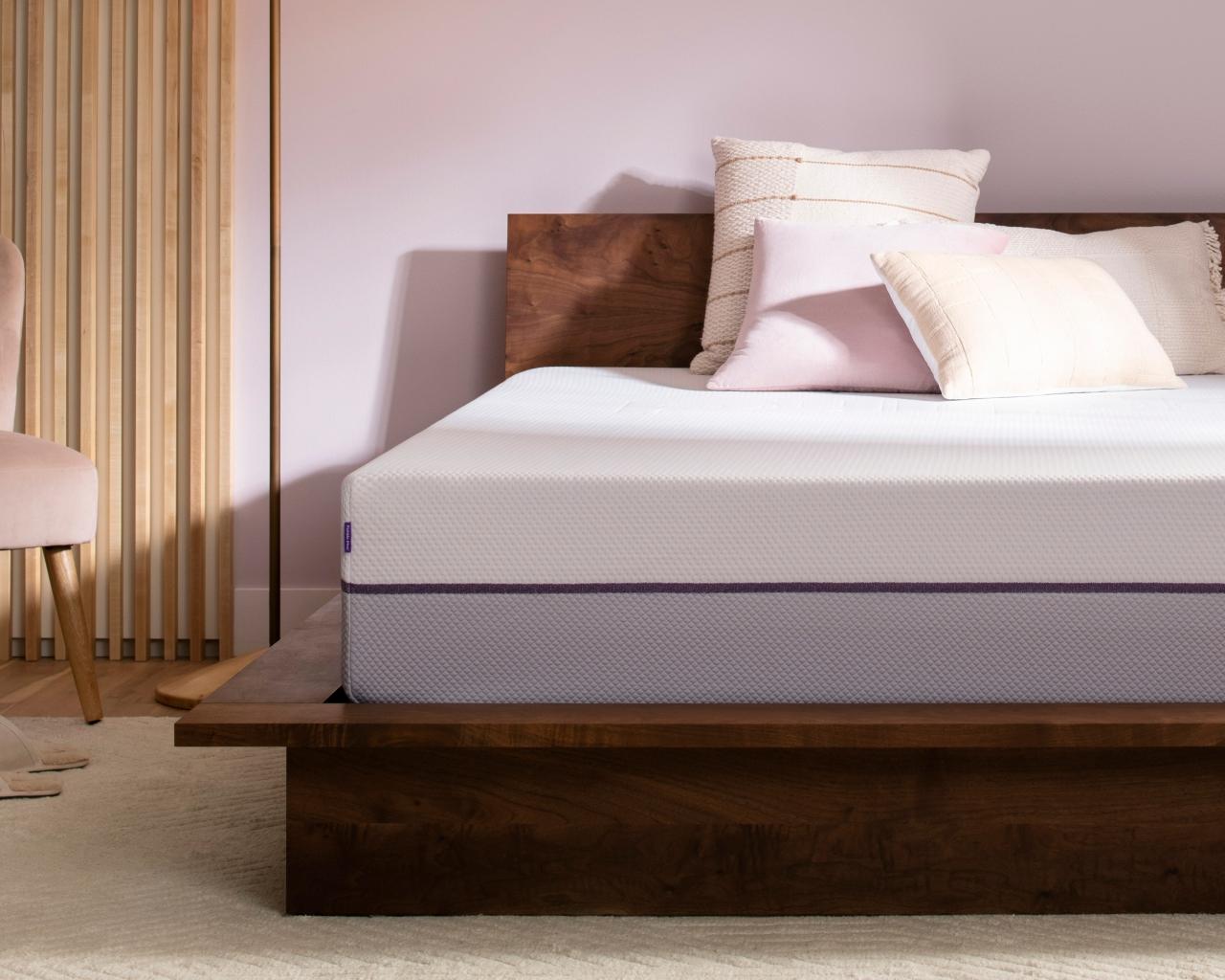 Purple Essential CollectionExperience the instantly adaptive GelFlex® Grid — at our best price.
Cradling comfort from the Purple GelFlex Grid
Easy, fast delivery
-
 Restore Hybrid CollectionStep up with a hybrid construction for enhanced pressure relief, support + up to 4x more cooling.*
GelFlex Grid + comfort layers for enhanced pressure relief
Maximum cooling — up to 4X cooler2 than competitors
Coil System provides responsive support
-
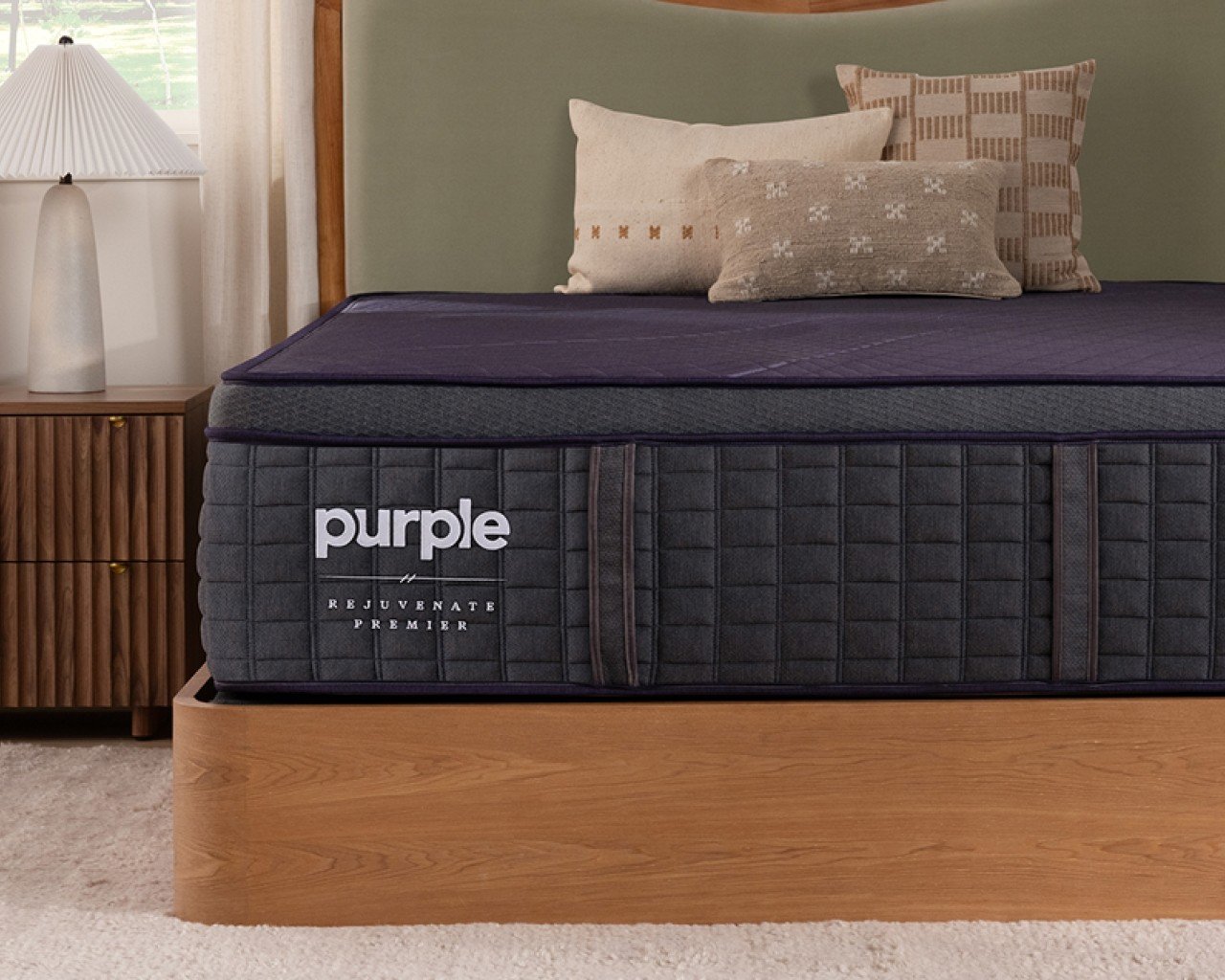 Rejuvenate Luxe CollectionQuilted Euro Top, enhanced comfort layers + hybrid construction offer maximum support.
All-new DreamLayer™ for soothing surface comfort
Layered Grid offers exceptional, full-body pressure relief
Adaptive Response Foam unlocks the Grid’s full comfort potential
Responsive coils maximize mattress cooling, longevity + stability


