How To Deodorize a Mattress in 7 Steps [Supplies + Tips]


Key Takeaways
- You can use baking soda, cornstarch, vinegar, or laundry detergent to make your mattress smell better.
- The most common causes of a bad-smelling mattress include sweat, bacteria, fungus, mold, mildew, urine, pet-related smells, and off-gassing.
- Prevent your mattress from smelling bad by using a mattress protector, keeping your mattress and bedding clean, and airing out your bedroom.
Is your mattress starting to smell a bit strange? Don't worry, you're not alone.
Humans spend about a third of their lives in bed sleeping. We spread dead skin cells, oil, and sweat all over our mattresses, and bring in all sorts of dirt and debris. As a result, your bed can easily become a breeding ground for bacteria and, in turn, funky odors.
While you may not need to go as far as disinfecting your pillows and mattress, knowing how to deodorize a mattress can make your bedroom a cleaner, more comfortable place to sleep.
Fortunately, refreshing your mattress is fairly simple. Read on to find out how you can get your mattress to smell fresh and clean again.

Protect Your Mattress
The Purple Waterproof Mattress Protector protects your mattress from water, dust mites, and dander to enhance your comfort and sleep quality.
How To Clean and Deodorize a Mattress
Just because a mattress has developed a certain smell, it doesn’t necessarily mean it’s time to kick it to the curb. Instead of assuming you need to replace your old mattress, consider the following steps to get rid of that funky odor.
Before attempting any cleaning processes, make sure you refer to the manual or contact your mattress manufacturer to follow proper use and care instructions.
1. Remove and Wash All Bedding
Before you can freshen up your mattress, you need to clear away and clean your bedding first. Wash your sheets and mattress protector while you work on deodorizing your mattress to make sure they’re clean and to give yourself full access to the surface of your mattress.
For a full refresh, be sure to whiten yellow sheets before remaking your bed.
2. Spot-Clean the Mattress
If you notice stains or discolored spots on your mattress, they may be a source of bad smells. Depending on the type and construction of your mattress, you can use a variety of cleaning products to address stains and other messes.
While you can use a carpet cleaner on some mattresses, it’s usually best to spot-clean with laundry detergent, dish soap, enzyme cleaners, or baking soda. It’s best to test any cleaning products on a small area before spot cleaning so you can avoid discoloration or deterioration.
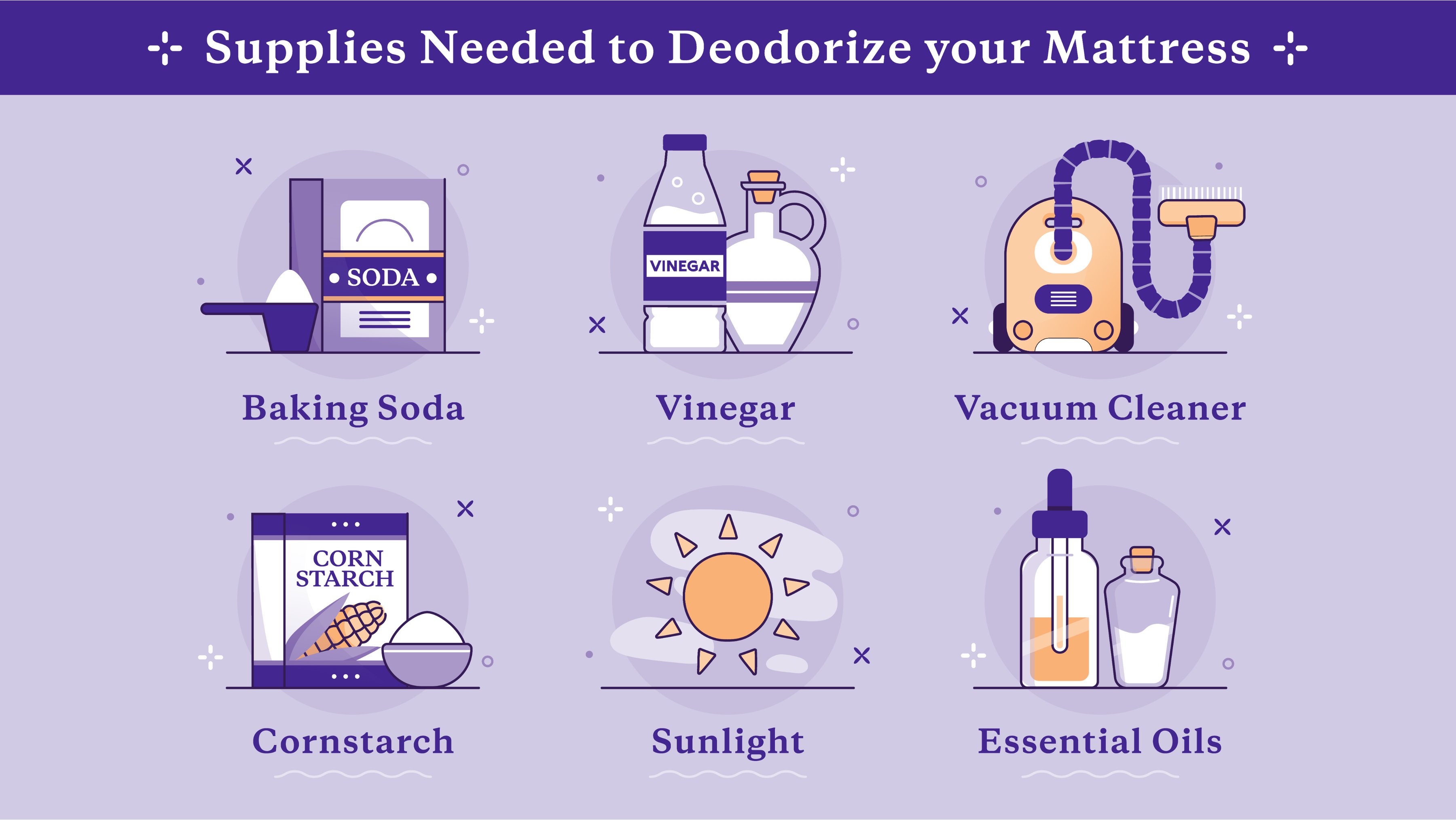
1. Baking Soda
3. Sprinkle Baking Soda or Cornstarch
Baking soda is a time-tested natural deodorizer that reduces unpleasant odors in everything from litter boxes to trash cans to refrigerators. Some deodorant brands even use baking soda as their main ingredient. Similarly, cornstarch does a pretty good job of absorbing moisture and smells, making both of these products great mattress odor removers.
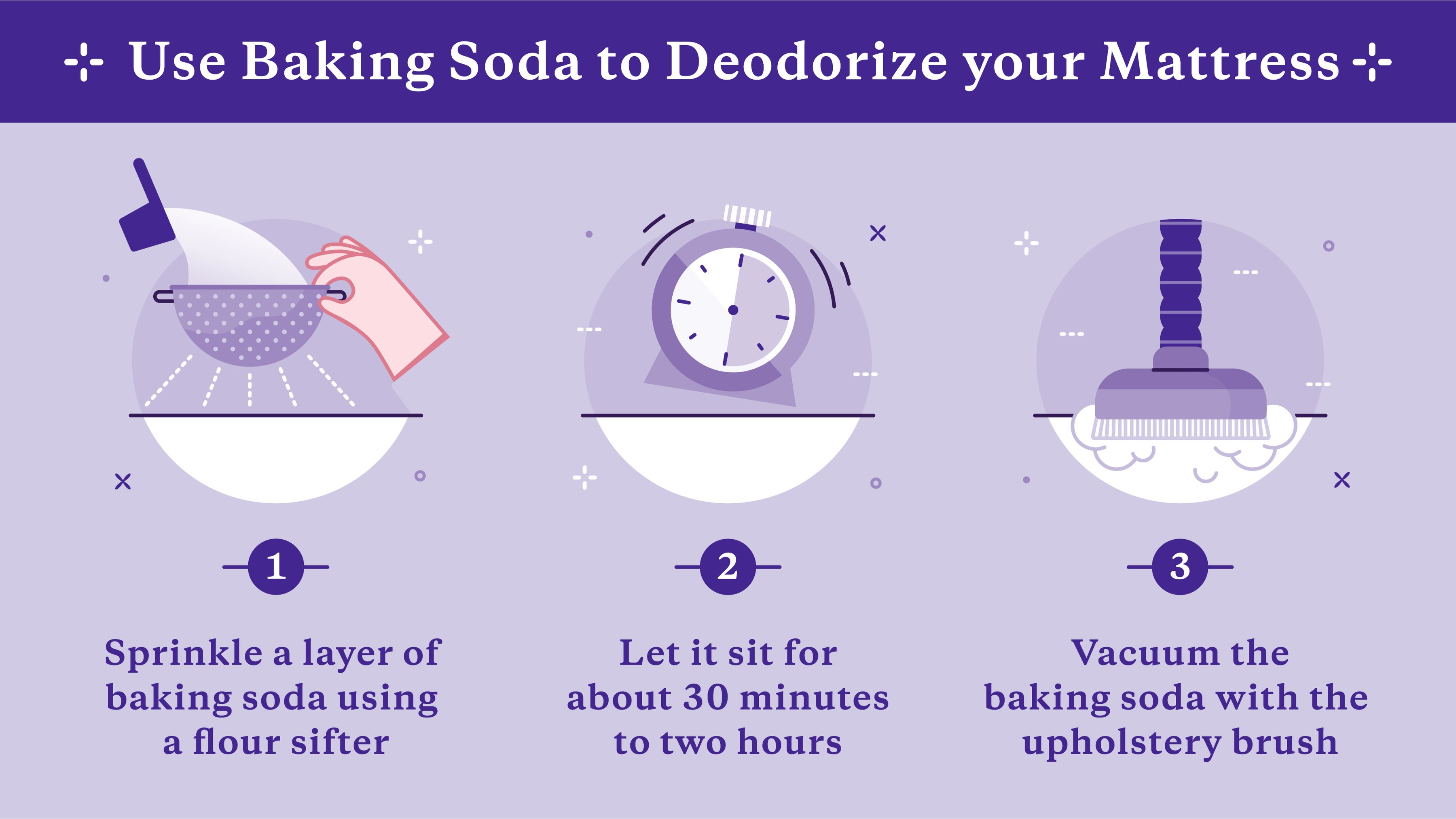
Here’s how you can use baking soda or cornstarch to deodorize your mattress:
Deodorize | Remove stains + deodorize | |
Step 1 | Using a flour sifter, sprinkle a layer of baking soda or cornstarch over your mattress. | Make a paste using baking soda, a bit of water, and laundry detergent. |
Step 2 | Let it sit for about 30 minutes to two hours. For really strong odors, keep it on overnight. | Spread the paste over the stain and let it sit for 30 minutes, then scrape it all off with a dry rag. |
Step 3 | Vacuum the baking soda or cornstarch using the upholstery brush on the vacuum cleaner. | Vacuum up the remaining debris. |
Another great way to remove foul-smelling stains is by sprinkling baking soda over the spot and then spraying vinegar on top. The combination will lift the stain out of the fabric. Then, blot it with a dry cloth rag or paper towels, and repeat until dry.
For extra tough stains and smells, mix cornstarch and baking soda, then sprinkle the mixture over your soiled mattress.
5. Use Essential Oils
If you have essential oils lying around, add about 15 to 20 drops into a box of baking soda and sift the mixture over your mattress. This will not only neutralize any odors but also freshen up your mattress with a delightful scent.
Some of the best essential oils for sleep, relaxation, and stress relief include:
- Lavender
- Chamomile
- Bergamot
- Sandalwood
- Cedarwood
- Peppermint
6. Apply a Vinegar Solution
Using white vinegar on your mattress may seem counterintuitive, but it’s commonly used as an all-around odor neutralizer. This is because distilled white vinegar contains about 5% acetic acid, which can inhibit the growth of odor-causing bacteria.
As with other products, it’s recommended to use a vinegar solution on a small area of your mattress first. Doing so can help make sure that using more of this solution won’t discolor your mattress or leave a persistent vinegar smell.
To use vinegar as a mattress deodorizer, you’ll want to:
- Mix equal parts of distilled white vinegar and water into a spray bottle and spritz the solution onto your mattress. You don’t want to make the mattress wet — just spray enough to cover the surface or the smelly spot.
- Let the vinegar air dry. You can also use a fan or a blow dryer to speed up the process.
- Sprinkle some baking soda on top for good measure.
- Let the baking soda sit for a few minutes, then vacuum it all up.
7. Let the Mattress Dry in the Sun
Sunlight is a natural, no-cost solution for killing odor-causing bacteria and lightening discoloration, but some mattresses — including Purple mattresses — should not be exposed to direct sunlight. If neither your mattress manufacturer or manual says anything against it, bring your smelly mattress out onto your porch or deck on a sunny day, and let it soak up the sunlight for a few hours.
If you don’t have the time or space to do that, simply opening a window and letting the sun into your bedroom can freshen up the mattress and your space.
No matter how you dry your mattress after cleaning it, make sure you let it dry completely before replacing your bedding to prevent mold from growing on your bed.
What Makes Mattresses Smell?
As your mattress ages, it may start to develop stains, become discolored, and smell. Over time, several factors can contribute to these issues, including bodily fluids, mold growth, and pet-related messes.
Mattress smell | Likely culprit | Recommendation |
Musty | Mold or mildew | Baking soda and essential oil |
Sour | Sweat, bacteria, or mold | Baking soda |
Ammonia | Urine | Baking soda and enzyme cleaners |
Yeasty | Pets | Baking soda and vinegar |
Chemical | Off-gassing | Let the mattress air out |
Sweat
Some people — particularly those who are more prone to sweating — end up producing mustier smells than others. If you’re a hot sleeper who frequently experiences night sweats, this could be one of the main reasons why your mattress has developed a stench. Opt for one of the best cooling mattresses for better airflow and temperature regulation to stay comfortable and keep your mattress in better condition.
Bacteria and Fungus
Our skin is covered with millions of microscopic bacteria, viruses, and fungi. While mostly harmless, these microorganisms cause an odor when mixed with our sweat. In a warm, damp environment, fungus can grow, resulting in discoloration, deterioration, and bad smells.
Urine
Urine is another major cause of foul smells and yellow stains on mattresses, especially for those who live with pets and young children who are still in the process of potty training. If you don’t clean pee off a mattress right away, mold can form in your mattress and create an even stronger, funkier smell. Urine also produces an ammonia-like odor, which can irritate your nose, throat, and lungs when breathed in.
Pets
Our pets can get into all sorts of adventures — collecting dirt, bacteria, and eventually funny odors on their fur and paws. Dogs, in particular, also have a certain yeasty smell thanks to the glands in their ears. Pet parents who share their bed should make an extra effort to deodorize their mattresses and bathe their pets to keep smells at bay.
Mold and Mildew
Some mattresses, like memory foam mattresses that are designed to conform to the shape of their users’ bodies, are more prone to trapping moisture than others.
Similarly, if you're storing your mattress, you may find that it smells musty when you retrieve it. That's because, when left unattended, trapped moisture can encourage the growth of mold and mildew, which can emit foul odors.
Off-Gassing
If you recently bought a new mattress and noticed a weird, chemical smell upon removing it from its packaging, you might be experiencing off-gassing. This is described as the process in which volatile organic compounds (VOCs) are let out into the air.
VOCs are chemicals that are used in the manufacturing and packaging of home products such as furniture, carpets, and mattresses. Memory foam and polyfoam mattresses are more likely to off-gas than innerspring and hybrid mattresses.
The good news is that off-gassing from memory foam and other common mattresses isn’t particularly harmful, though it can trigger headaches, allergies, and asthma in some people.1 These effects, and the “new mattress smell,” usually dissipate in a few hours.
Concerns about off-gassing are common, but you don’t have to worry about that with Purple mattresses. Purple mattresses may give off a new mattress smell, but they do not off-gas and are completely non-toxic.
How To Keep Your Mattress From Smelling
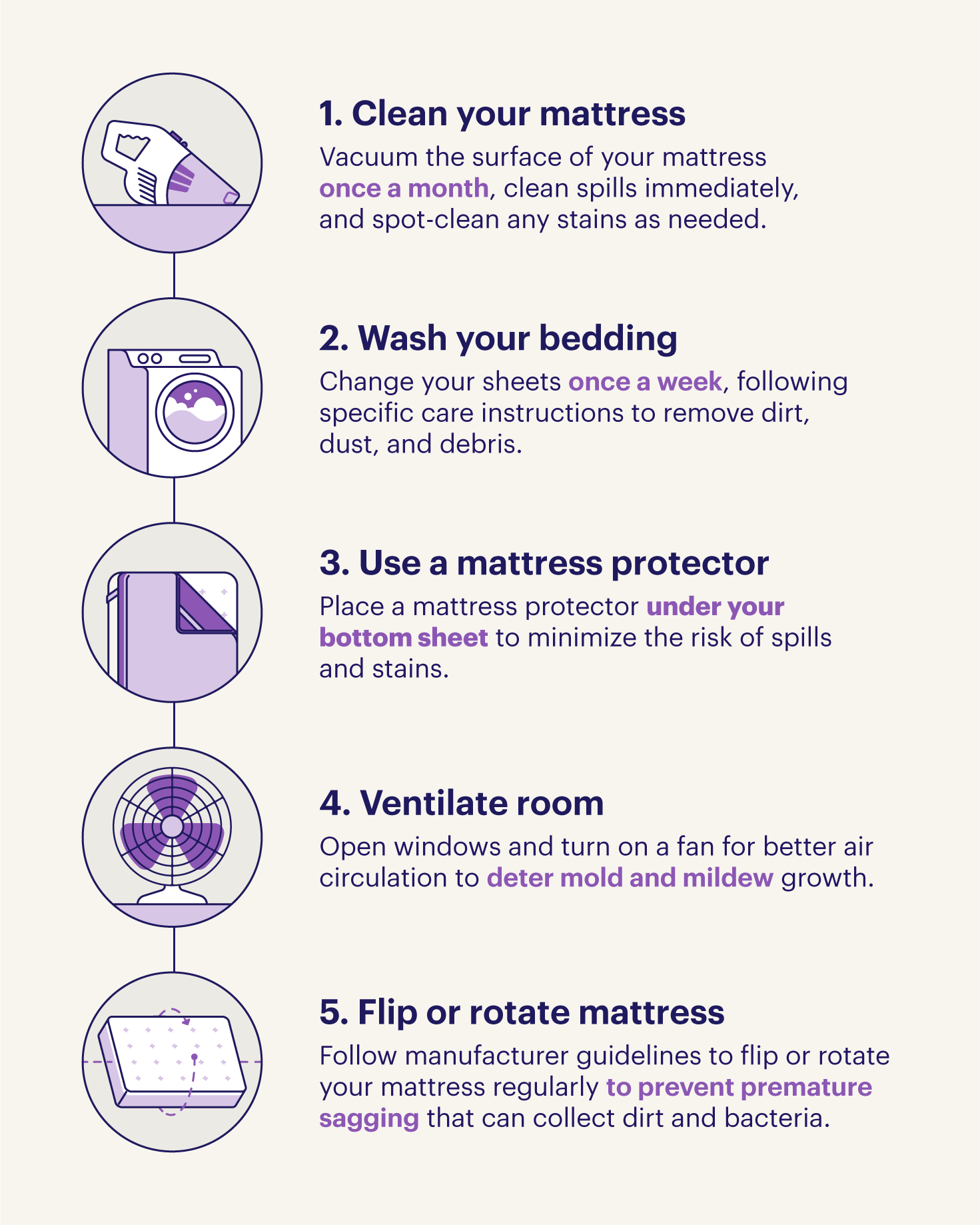
You can avoid having to deodorize your mattress by simply keeping it fresh and clean in the first place. Here are five simple tips you can follow:
1. Keep Your Mattress Clean
Something as simple as vacuuming your mattress at least once a month can keep it from smelling musty and dusty. When cleaning your mattress, make sure to vacuum the bed base, platform, or box spring as well.
2. Wash Your Bedding Regularly
Wash bedsheets, duvet covers, pillowcases, and blankets at least once a week to get rid of foul smells, dead skin cells, sweat, dirt, and dust. You should wash your pillows at least once or twice a year, but be sure to refer to the care instructions before getting your pillows wet.
3. Use a Mattress Protector or Topper
Mattress protectors are water-resistant covers that go between the top of the mattress and the fitted sheet. They act as a protective barrier, keeping dirt, debris, dust mites, and liquids out of your mattress. Even if you consider yourself a neat individual, you should use a mattress protector to shield the mattress from accidents and ensure it lasts a long time.
A mattress topper, on the other hand, is an additional layer of foam (usually 2-4 inches thick) that is placed on top of a bed to:
- Add support and make a mattress firmer, or
- Make a mattress softer
While not designed to protect your mattress from messes and spills, a mattress topper can double as a protective barrier.
4. Air Out Your Room
A dark, stuffy room is the ideal place for mold, mildew, and bad smells to develop on a mattress. A poorly-ventilated room can also cause nighttime congestion, preventing and disrupting sleep. To prevent this, open your windows and let air and sunlight into your bedroom regularly. Turning on a fan helps, too.
You can also air out your mattress by propping it against a wall so that both sides can dry.
5. Flip or Rotate Your Mattress
Flipping and rotating mattresses can keep them from sagging prematurely. Dirt, debris, and moisture can pool in the indents of a mattress — all of which can hasten the buildup of bacteria and odor.
Check with your manufacturer if you can flip or rotate your mattress. Most modern mattresses are not designed to be flipped, but many can be rotated every few months. Purple mattresses can be rotated, but they should never be flipped.
What Is the Fastest Way To Freshen a Mattress?
If your mattress starts to smell, don’t wait — take care of the problem as soon as possible. By following these simple home remedies, you can easily keep your mattress smelling fresh for years to come
But if your mattress is over seven years old, has started to sag, or nothing you do gets rid of its musty, sour smell, it may be time to replace your mattress. Invest in the quality of your sleep with a Purple mattress, featuring the revolutionary GelFlex Grid® (also called the Gel Matrix™) in every model for adaptive, temperature-balancing comfort and support.

Experience Your Best Sleep Ever
The GelFlex Grid® inside every Purple mattress cradles your pressure points, supports your back, and keeps you cool night after night.
FAQ
Your mattress may smell for several reasons, including:
- Sweat buildup
- Bacteria and fungal growth
- Mold and mildew
- Urine from pets or bedwetting
- New mattress off-gassing
As your mattress ages, it may start to smell, especially if you don’t regularly clean it and air it out.
Whether you’re trying to get the smell of sweat, urine, mold, or dust out of your mattress, you can generally remove odors by:
- Removing and washing all your bedding
- Spot-cleaning noticeable stains and spills
- Sprinkling baking soda or cornstarch — with or without essential oils — over the surface and leaving it for several hours
- Vacuuming up all baking soda and cornstarch
- Applying a diluted vinegar solution or enzyme cleaner if smells persist
- Letting the mattress air dry completely in the sun
If these steps don’t refresh your mattress, it may be time to consider buying a new one.
If you’re using baking soda to clean your mattress, you should let it sit on the surface for a few hours or overnight before vacuuming it up. For minor messes and mild odors, you may be able to let it sit for as little as 15 minutes, but a longer resting period may be more beneficial.
A sour mattress smell may be caused by sweat, oils, bacterial growth, or trapped moisture. A combination of airing out your mattress, sprinkling baking soda, and applying a vinegar solution may help remove this sour smell.
More To Explore
Level up your sleep routine with our most-loved products.
-
100% washableOn sale

Purple Waterproof Mattress Protector
From Is dollars Is now dollarsShop Purple Waterproof Mattress ProtectorMaximum protection, maximum comfort
-
Super stretchyOn sale
Purple SoftStretch® Sheet Set
From Is dollars Is now dollarsShop Purple SoftStretch® Sheet SetSmooth + stretchy to maximize GelFlex Grid benefits
-
Targets back painOn sale
RestorePlus® Hybrid Mattress
From Is dollars Is now dollarsShop RestorePlus® Hybrid MattressDeeper 3" GelFlex Grid + zoned coils for targeted comfort, support, and spine alignment.
About the authors

April has nearly a decade of writing experience, with 3+ years specializing in sleep content. Her work has been covered by sites like BuzzFeed, Entrepreneur, and Money Under 30. She has an M.A. in Magazine, Newspaper, and Online Journalism from Syracuse University and a B.A. in Communication Studies. As a self-proclaimed expert in all things cozy, she sleeps better at night, knowing her writing helps others sleep in comfort, too.

Tyler Wright is a Senior Product Manager of mattresses. With over 10 years of experience in product development, he is dedicated to developing innovative products that enhance and improve lives. At Purple that means building products that help people get the best sleep ever.
Sources


-
 Purple Essential CollectionExperience the instantly adaptive GelFlex® Grid — at our best price.
Cradling comfort from the Purple GelFlex Grid
Easy, fast delivery
-
 Restore Hybrid CollectionStep up with a hybrid construction for enhanced pressure relief, support + up to 4x more cooling.*
GelFlex Grid + comfort layers for enhanced pressure relief
Maximum cooling — up to 4X cooler2 than competitors
Coil System provides responsive support
-
 Rejuvenate Luxe CollectionQuilted Euro Top, enhanced comfort layers + hybrid construction offer maximum support.
All-new DreamLayer™ for soothing surface comfort
Layered Grid offers exceptional, full-body pressure relief
Adaptive Response Foam unlocks the Grid’s full comfort potential
Responsive coils maximize mattress cooling, longevity + stability


