
Side Sleeper Guide: How To Sleep on Your Side + Benefits



What is side sleeping?
Side sleeping refers to a common sleep position in which a person sleeps on their right or left side.
As people age, they tend to shift sleeping positions less often throughout the night, and may have a preference for sleeping on their sides.1
Knowing how to sleep on your side correctly can enhance comfort and benefit sleep health. There are many health benefits to side sleeping, but there are a few drawbacks to consider as well.
Your sleep quality can be influenced by the position you prefer and how comfortable and supportive your mattress feels in that position. If you prefer the side sleeping position, be sure to choose the best mattress for side sleeper support that keeps your spine aligned and relieves pressure from your hips.
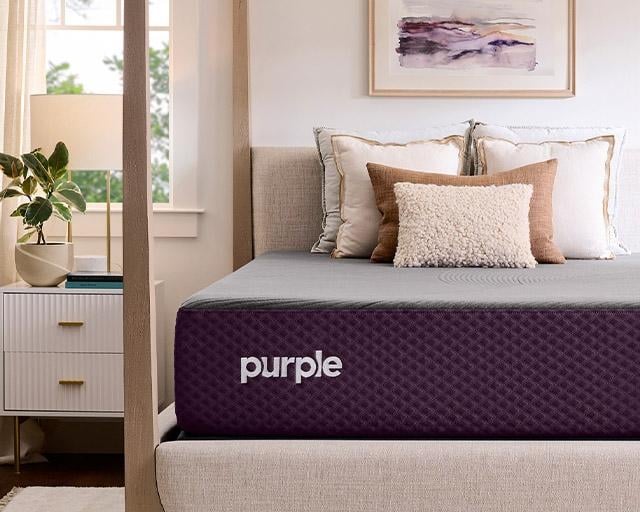
The Comfort and Support You Need
Adaptive layers of foam, coils, and our GelFlex Grid® make the RestorePremier® Hybrid Mattress perfect for keeping side sleepers aligned.
1. Keep Your Spine Supported
No matter what position you prefer, supporting the natural curves of your spine may help improve your sleep health. This includes:
- Centering your chin and neck between your shoulders
- Aligning your shoulders to be parallel with your hips
- Keeping your head straight rather than tilted or bent
2. Use a Supportive Pillow
Like with other positions, using a supportive pillow can help reduce pain and discomfort by promoting neutral head and neck positioning. Side sleepers often benefit from a pillow that is thick enough to support your head while keeping it in line with your sternum, like the Purple Harmony™ Pillow.
If you’re looking for a comfortable side sleeper pillow position, these tips might help support your body and ease pressure points:
- Opt for a mid-to-high-loft pillow for neck alignment.
- Hug a pillow to your chest to prevent arm pain and numbness.
- Place a low-loft pillow between your knees to keep hips aligned and comfortable.
3. Cushion Your Knees
Side sleepers can place a pillow between their knees to help keep their hips aligned while they sleep. Find a flat or low-loft pillow like the Purple Harmony Anywhere™ Pillow and place it between your knees while sleeping on your side. Make sure your hips are aligned, not tilted, and your legs are about shoulder-width apart. In general, research suggests that this type of side lying can be protective against hip pain and lower back pain.3
4. Adjust Your Arms
Side sleepers sometimes experience pain and discomfort in the arms and shoulders, so finding the best position for your torso can help ease tension. In most cases, keeping your arms by your sides, slightly in front of your body, or wrapped around a pillow tends to be most comfortable.
5. Adopt a Comfortable Position
How you choose to sleep on your side depends on what is most comfortable and what provides the most support. The five most common side sleeper positions you can try include the following:
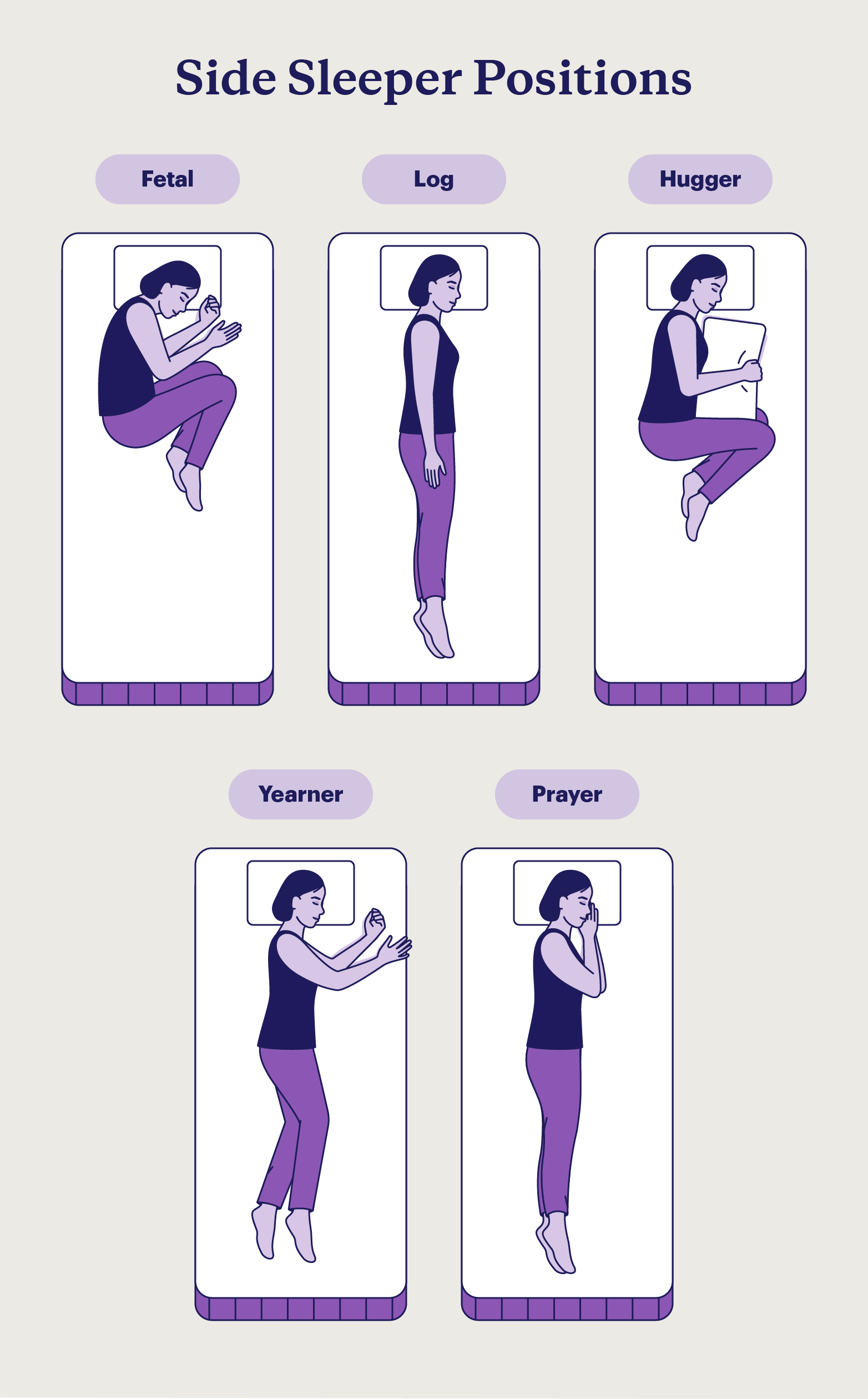
- Fetal position: Sleepers bring their bent knees close to their chests, sometimes holding their knees in place. This position can be comfortable, but the curvature of their spines may lead to muscle strain and discomfort for some people.
- Log position: Sleeping in the log position means lying straight with your arms at your sides, which may cause knee pain or arm numbness. Rotating positions throughout the night may help reduce pressure on your arm.
- Hugger: Huggers often hold a pillow, blanket, or partner close to their chests, sometimes wrapping their legs around as well. A pillow with adjustable firmness – like the Purple Freeform™ Pillow – can help customize pillow height and thickness for added comfort.
- Yearner: Yearners tend to sprawl with their arms outstretched in front of them. While they may keep their legs straight initially, yearners may also spread their legs during sleep.
- Prayer: Sleeping in the prayer position means putting your hands together and resting them under your head or pillow. This can elevate your head and reduce pressure on your neck, which may be more comfortable for those sleeping with neck pain.
You may not feel like you fall into any of these positions — couples’ sleep positions, for example, may look different, even if both partners sleep on their sides. It’s important to find a comfortable position that supports your body.
6. Stretch Often
Stretching helps relax your muscles before bed and can help in the morning with stiffness. Whether you want to avoid shoulder pain or you struggle to get comfortable in bed, stretching can be a great way to reduce and alleviate discomfort. Three simple stretches most people can do include:
- Side bend stretch: Stand with your feet shoulder-width apart, place both arms straight up over your head, then bend over to your right, hold for 20 seconds. Repeat with your left side for four to five cycles on each side.
- Forward bend stretch: Starting with the same position as the above stretch, bend straight forward at the waist and hold for 20 seconds at a time.
- Big arm circles: Rotate your arms in a slow circular motion, extending your arms up as high as you can. Repeat 10-20 times with each arm.
7. Invest in a Quality Mattress
No matter what sleep position you prefer, a high-quality mattress that helps relieve pressure can support more comfortable sleep, whether you’re struggling with a specific condition like IT band pain or general discomfort. In fact, sleepers on Purple mattresses reported 63% less sleep-interfering pain10, helping them rest more comfortably through the night.
Test mattresses in different firmnesses and determine which one is best for you and your partner. Some research suggests that people with lower back pain may benefit from a medium-firm mattress, as a softer mattress might not provide adequate support.4
Side sleepers often prefer plush to medium mattress firmness that cradles their shoulders and hips, which may help alleviate pressure point pain. Dr. Vanessa Hill, a sleep scientist and science communicator, notes that “as a side sleeper, I prefer Purple’s soft RestorePremier® Hybrid Mattress, because the way it cradles my hip feels like a supportive hug.”
Which Side Should You Sleep On?
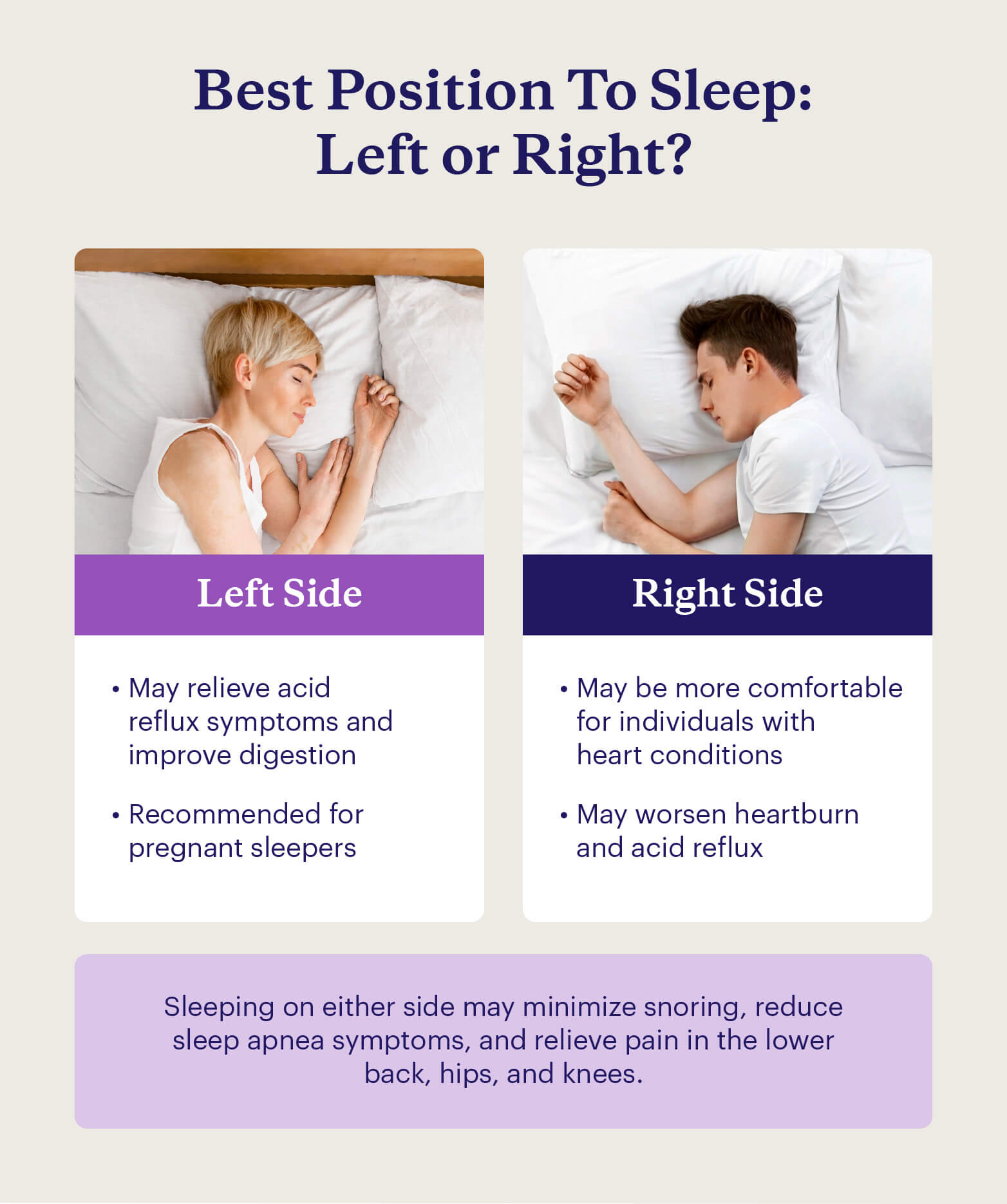
Side sleeping may feel more comfortable and help reduce pain regardless of what side you choose, but left-side sleeping is often recommended, especially for individuals who have acid reflux.6
Sleeping on your right side can provide many of the same benefits as sleeping on your left, but it may worsen conditions like acid reflux. People with heart problems often report sleeping on their right side, possibly as this position may reduce pressure on the heart.7
Benefits of Sleeping on Your Side
While sleeping positions vary greatly, some research suggests that side sleeping may offer several potential benefits, including:
Providing Pain Relief
When you sleep on your side, you may reduce pressure from your hips and knees, especially if you put a pillow between your knees. Sleeping on your side may reduce back pain and stiffness, by reducing pressure on your spine.
Reduced Snoring
People who sleep on their side may snore less and experience fewer issues related to sleep-disordered breathing.5 Compared to sleeping on your back, sleeping on your side can help keep your airways more open, supporting better airflow.
Promoting Digestive Health
Sleeping on your side may be good for digestion. Some studies suggest that sleeping on your left side may help reduce symptoms of heartburn as well as acid reflux.6 Because the stomach is positioned primarily on the left side of the body, sleeping on your left side may help digestion.
Supporting a Healthy Pregnancy
Clinicians may advise pregnant patients to sleep on their side to promote blood flow to their placenta, kidneys, and uterus. This position can also reduce pressure on internal organs and improve circulation.8
Is It Bad To Sleep on Your Side?
Much like back sleeping, side sleeping can be beneficial in many ways. But you should also consider your personal preferences and sleep needs, as well as potential drawbacks to this position, before trying to change how you sleep.
Pros | Cons |
May relieve lower back pain | May cause arm numbness |
May improve digestion | May worsen acid reflux and heartburn |
May reduce snoring | May cause shoulder pain |
Recommended during pregnancy | May increase facial irritation |
May be uncomfortable for those with heart conditions |
In some cases, side sleeping may:
- Cause arm or shoulder pain or numbness: Depending on how you position your arms and shoulders — as well as the pressure relief your mattress provides — you may experience discomfort, numbness, or pain. Improving your sleep posture and choosing supportive pillows can help alleviate these issues.
- Worsen acid reflux and heartburn: If you sleep on your right side, you may experience more heartburn or acid reflux due to the orientation of the stomach.
- Contribute to facial irritation: Sleeping on your side means that one side of your face is usually pressed into your pillow, so compared to back sleepers, side sleepers may have more facial irritation and breakouts. Washing your pillowcases regularly can help mitigate this effect.
- Put additional strain on the heart: Sleepers with certain heart conditions may find that sleeping on their left side contributes to pain, discomfort, and breathing problems.4 For individuals with heart problems, sleeping on the right side may feel more comfortable.
Ultimately, you should choose a sleep position that is comfortable and keeps your spine supported.
Is Side Sleeping Bad for Your Shoulder?
Sleeping on your side can sometimes lead to pain in the arms and shoulders. While this discomfort can be a deterrent, you can adjust your sleep environment and position to sleep on your side without hurting your shoulder. Some of the best tips to relieve and prevent pain include:
- Prioritize a supportive pillow: For proper neck support, opt for a pillow that comfortably fills the space between your neck and your mattress while on your side.
- Use additional pillows for support: Side sleepers can benefit from a pillow between their knees, in front of their stomach, and against their back to relieve pressure and promote alignment.
- Hug a body pillow: If you experience arm numbness, try adjusting your position or hugging a body pillow. Numbness can be especially common for people who sleep in the log position, which can compress the nerves by pinning one arm underneath the body.
- Invest in a mattress with ample pressure relief: Mattresses with cushioning, adaptive materials like the GelFlex Grid® may provide targeted pressure relief, and help reduce arm pain and numbness.
How To Train Yourself To Sleep on Your Side
While the side sleeper position isn’t ideal for everyone, it may offer a variety of benefits that make it worth considering. Lying on your left side may help avoid gastroesophageal reflux disease (GERD) symptoms and heartburn.6
Conditioning yourself to sleep on your side may take some time, but there are a few strategies to make the transition easier.
- Put a pillow between your legs: This position can help align your hips and spine, reducing pressure on your lower back. You can use a body pillow for full-body support or a smaller pillow to reduce discomfort.
- Use the tennis ball method: When you want to switch sleep positions, place uncomfortable objects around your body to prevent yourself from rolling around at night.
- Be patient: Making any changes to your habits takes time and patience. If you find the position uncomfortable even after a few nights, it may not be the best fit for you.
Ultimately, your comfort takes top priority, and learning how to sleep on your back might be worth exploring. No matter what sleep position you prefer, make sure you’re sleeping on a supportive mattress that keeps your spine supported and adapts to your body for comfort.
Best Mattresses and Pillows for Side Sleepers
When it comes to sleeping on your side, your mattress and pillow will play an important role in how you feel in the morning. Pillows and mattresses designed for side sleepers should support your spine, cushion your pressure points, and relieve pressure so you stay comfortable throughout the night.
Mattresses
If you tend to sleep on your side, you may prefer a mattress with a soft to medium firmness. Having the right amount of contouring in your mattress can help reduce stress on your shoulders, hips, and spine when sleeping.
Side sleepers may want to steer clear of very firm mattresses as they can contribute to joint pain from the lack of flexibility on your body’s pressure points.
We recommend the following Purple mattresses for side sleepers:
- RestorePremier® Hybrid: The RestorePremier® Hybrid mattress cradles your body to relieve pressure with Ultra Comfort Foam and CoolFlex™ Coils that help keep you cool, provides dynamic support, and offers targeted pressure relief for side sleepers.
- RestorePlus® Hybrid: With our patented GelFlex Grid® and 3 Zone Edge-to-Edge Coils, the RestorePlus® Hybrid mattress provides core body support for side sleepers.
- RejuvenatePremier®: For maximum comfort and support, the RejuvenatePremier® mattress features exceptional, full-body pressure relief for truly rejuvenating sleep.
- Purple Plus®: With our patented GelFlex Grid® technology and twice as much Base Foam as other Essential models, the Purple Plus® mattress provides stability and support for side sleepers.
Pillows
The best pillow for side sleepers depends on your personal preferences and sleep needs, but you should look for a pillow that provides plenty of support and helps keeps your head and neck in a neutral position. Side sleepers tend to prefer pillows with a medium to tall height (or loft) to better support their necks and prevent discomfort.
If you prefer to sleep on your side, we recommend the following pillows:
- Purple Harmony™ Pillow: Available in three loft options, the supportive, responsive Purple Harmony™ Pillow contours to your neck with a 360-degree wrap of our patented Honeycomb GelFlex Grid® and moisture-wicking mesh to help keep you cool.
- Purple Freeform™ Pillow: The Purple Freeform™ features a 360-degree wrap of our Honeycomb GelFlex Grid® and MicroFlex™ Moon Foam that you can add or remove to fine-tune loft and firmness to your exact liking. Adjustable Neck Roll Chambers offer targeted support that helps keep your neck aligned.
- Purple DreamLayer® Pillow: With a layer of our GelFlex Grid® and MicroAir™ Foam, the Purple DreamLayer® Pillow creates the same conforming comfort of memory foam without trapping heat. This pillow features two removable Booster Layers so you can customize the loft to your preference.

The Best Pillow for Side Sleepers
With MicroFlex™ Moon Foam you can add or remove to suit your needs, the Purple Freeform™ Pillow provides custom support for side sleepers.
What Is the Best Way To Sleep on Your Side?
Sleeping on your side — particularly your left side — is arguably one of the healthiest sleep positions, but if it causes discomfort, pain, or sleep disruptions, you may prefer sleeping on your back. No matter how you sleep, opting for a supportive mattress and comfortable pillows is key.
If the benefits of side sleeping appeal to you, it may be worth making the switch. Learning how to sleep on your side doesn’t come naturally to everyone, but doing so may support better sleep quality and overall well-being. Remember to be patient and make adjustments to find a position that keeps your spine supported and helps you sleep soundly.
Support your preferred sleep position with a mattress that adapts to your body and relieves pressure where you need it most. Purple mattresses feature the innovative and instantly adaptive GelFlex Grid®, providing targeted support and pressure relief for any sleep position.
FAQ
The best way to sleep on your side is to lie in a position that keep your neck, back, and hips in a neutral alignment. Often, this means using pillows to cushion your knees and arms, promoting proper alignment, but you should find a position that feels comfortable and supportive to you.
You should keep your arms and hands below your shoulders, either straight by your sides or slightly bent, to avoid compressing the nerves in your shoulders. You may also want to sleep with your arms wrapped around a pillow to prevent pain, discomfort, and numbness.
Side sleeping is typically associated with less spinal pain than stomach sleeping, but back sleeping appears to be the best position for back pain relief.10 If you experience back, hip, or knee pain while sleeping on your side, try putting a pillow between your legs to provide some relief.
Sleeping on your left side may put added pressure on your heart and stomach, resulting in discomfort for those with certain heart problems or digestive issues. Generally, lying on your left side is recommended over sleeping on your right, but you should choose a position that feels comfortable and does not disrupt your sleep.
Sleeping on your left side may reduce acid reflux and heartburn. Your stomach is positioned in a way that makes reflux less likely when lying on the left side of your body, so lying on this side may promote better symptom control.
There is a chance that sleeping on your right side could make acid reflux symptoms worse. If you’re a side sleeper with acid reflux or heartburn, you may benefit from training yourself to sleep on your left side.
More To Explore
Level up your sleep routine with our most-loved products.
-
Our coolest sleepOn sale
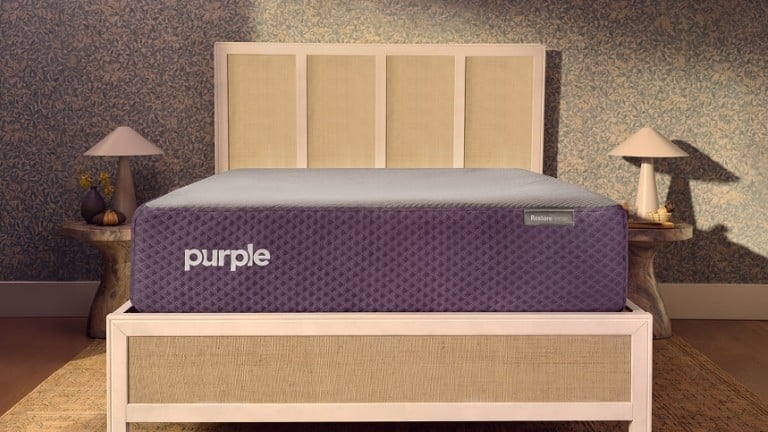
RestorePremier® Hybrid Mattress
From Is dollars Is now dollarsShop RestorePremier® Hybrid MattressDeep contouring 3" GelFlex Grid + CoolFlex coils for immersive comfort and advanced cooling.
-
Best sellerOn sale
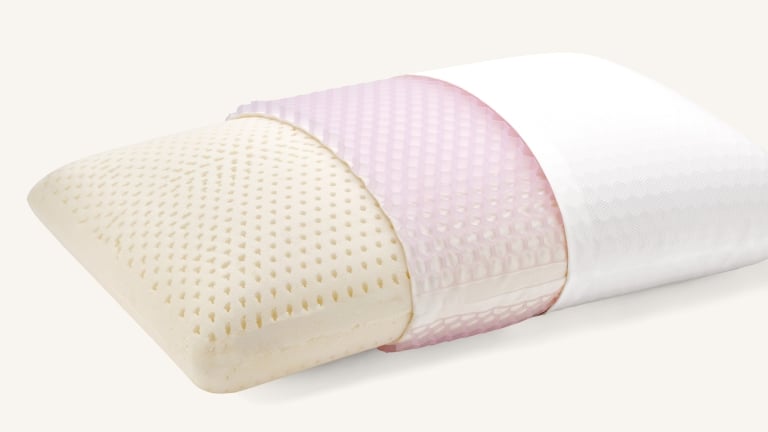
Purple Harmony™ Pillow
From Is dollars Is now dollarsShop Purple Harmony™ PillowInstantly responsive + doesn’t fall flat
-
On sale
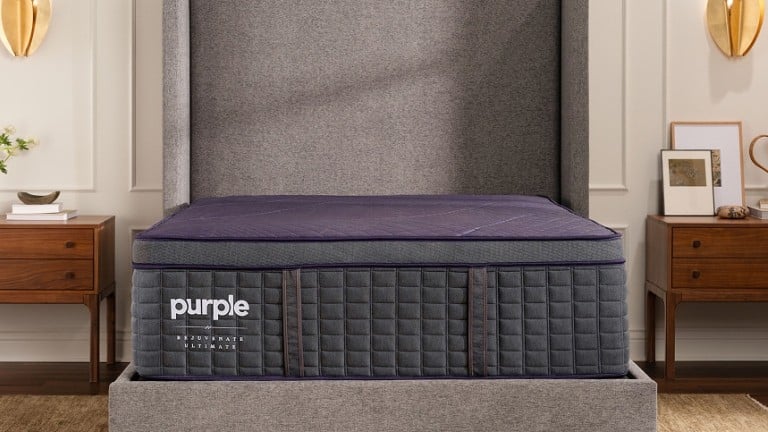
RejuvenateUltimate® Mattress
From Is dollars Is now dollarsShop RejuvenateUltimate® MattressDreamLayer® top with 2" + 3" layered GelFlex Grid for maximum pressure relief and luxury comfort.
About the authors

Sydney brings more than five years of experience writing about a range of topics including health, lifestyle, and technology. They have a B.A. in Creative Writing and Literature from Lebanon Valley College. They’re a big fan of sharing dreams and discussing symbolism for fun. Sydney is always searching for tips to improve their sleep quality and hopes to help others get the best sleep possible with their writing.

Dr. Vanessa Hill, PhD is a sleep scientist and public educator whose research explores bedtime procrastination and the impact of technology on sleep. Published in leading journals and featured in major media, her research focuses on developing practical, behavior-based strategies to improve sleep and help people around the world rest better.

Tyler Wright is a Senior Product Manager of mattresses. With over 10 years of experience in product development, he is dedicated to developing innovative products that enhance and improve lives. At Purple that means building products that help people get the best sleep ever.
Sources
- Sleep Journal
- BMJ Open
- Journal of Orthopaedics and Traumatology
- Oschner Journal
- Journal of Clinical Gastroenterology
- MedlinePlus
- Journal of the American College of Cardiology
- Stony Brook University
- AARP
- Survey results from a SleepScore Labs study with subjects sleeping on a Purple Restore Collection mattress for 4-weeks compared to their original mattress.
Related Articles


-
 Restore Hybrid CollectionStep up with a hybrid construction for enhanced pressure relief, support + up to 4x more cooling.*
GelFlex Grid + comfort layers for enhanced pressure relief
Maximum cooling — up to 4X cooler2 than competitors
Coil System provides responsive support
-
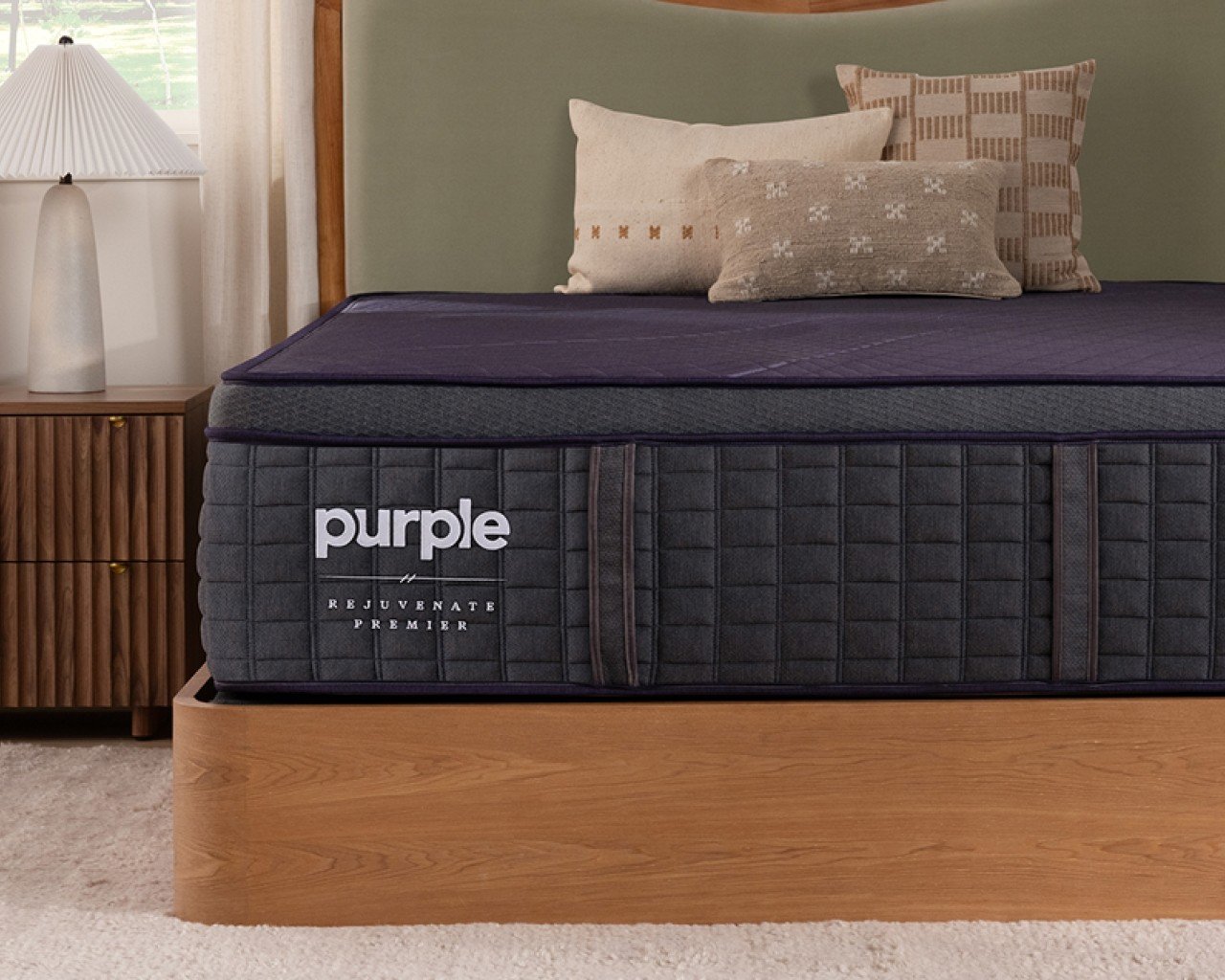 Rejuvenate Luxe CollectionQuilted Euro Top, enhanced comfort layers + hybrid construction offer maximum support.
All-new DreamLayer™ for soothing surface comfort
Layered Grid offers exceptional, full-body pressure relief
Adaptive Response Foam unlocks the Grid’s full comfort potential
Responsive coils maximize mattress cooling, longevity + stability
-
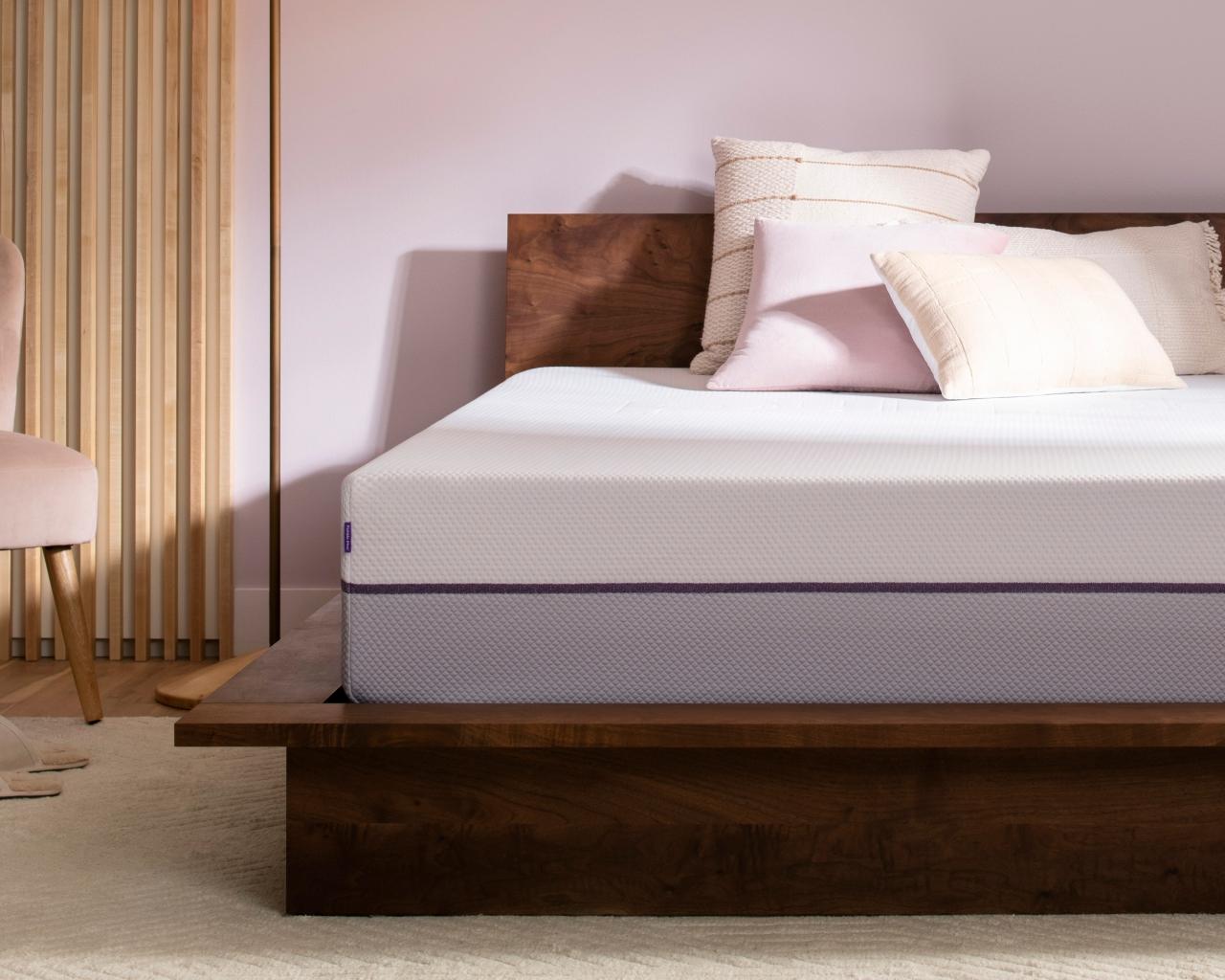 Purple Essential CollectionExperience the instantly adaptive GelFlex® Grid — at our best price.
Cradling comfort from the Purple GelFlex Grid
Easy, fast delivery


