
Best Sleeping Position for IT Band Pain: Relief + Prevention Tips



What’s the best sleeping position for IT band pain?
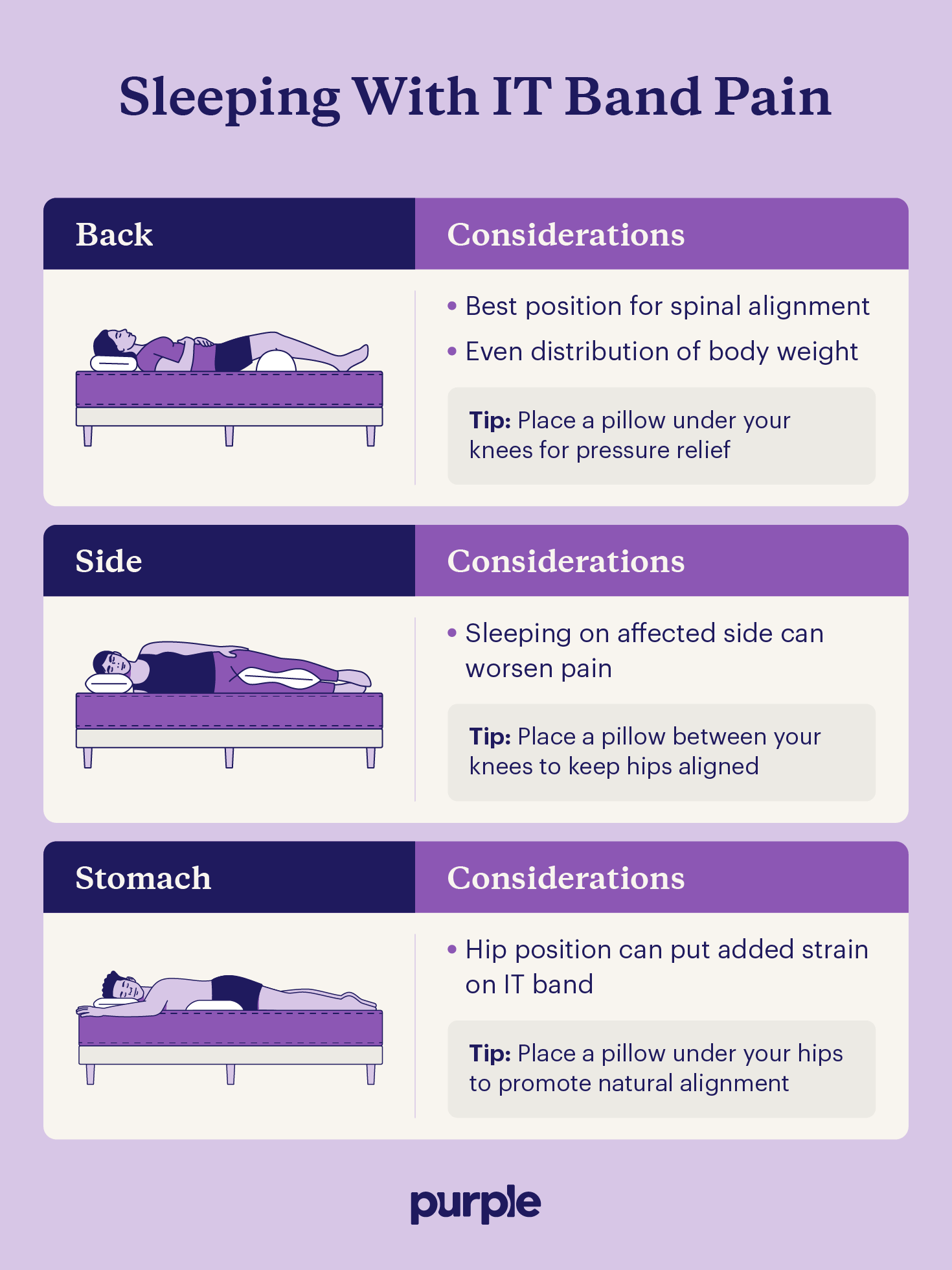
The best sleeping position for IT band pain relief is on your back. Sleeping on your back allows your spine to rest naturally and distribute your weight more evenly, reducing stress on the IT (iliotibial) band.
IT band pain, or iliotibial band (ITB) syndrome, is an overuse injury, most common in runners and cyclists who repetitively bend and extend their knees.1 Specific sleeping positions may exacerbate symptoms, making it helpful to sleep in certain positions. Generally, the most supportive position for IT band pain relief is sleeping on your back, which can reduce stress on your muscles.
Below, we'll explore why IT band syndrome occurs, how you can sleep on your back to reduce pain, and what pain relief options you have. Then, we'll look closer at your mattress and bed frame to see if they support your body and provide sufficient comfort.
Back Sleeping: The Best Position For IT Band Pain Relief
We've already mentioned that back sleeping is often recommended for IT band pain relief, but why? For starters, sleeping on your back allows your spine to rest in a neutral position, which can help reduce overall stress on your IT band.1 Sleeping on your back also helps distribute your body weight more evenly and prevents your hips from rotating inward, further reducing potential pressure.
If you're wondering how to sleep on your back, there are several tricks you can employ to train your body. Start by elevating your head and placing a pillow under your knees for additional support. If you find yourself tossing and turning, use extra pillows to keep yourself in place.
While sleeping on your back to reduce IT band pain, avoid crossing your legs, as this may increase pressure on your IT band.
What Causes IT Band and What Are the Symptoms?
You may experience IT band pain for various reasons, especially if you are an athlete in a sport with repetitive knee bending. Your IT band is a thick band of connective tissue that runs along the outside of your thigh from your hip to your shinbone, and repetitive knee movements can cause the IT band to rub against the bone on the outside of your knee, contributing to irritation.2
Common causes of IT band syndrome can include3:
- Conditions such as bowlegs or knock knees
- Overtraining or an increase in knee activity
- Poor running form or worn-out athletic shoes
- Running on uneven surfaces
- Weakened muscles in your hips
Symptoms of IT band syndrome may include:
- Aching or tenderness on the outside of your knee
- A clicking or popping sound coming from your knee
- Excessive swelling on the outside of your knee
- Pain radiating up your thigh or down your shin
- Sharp or burning pain on the outside of your knee
Other Pain Relief Options for Sleeping With IT Band Syndrome
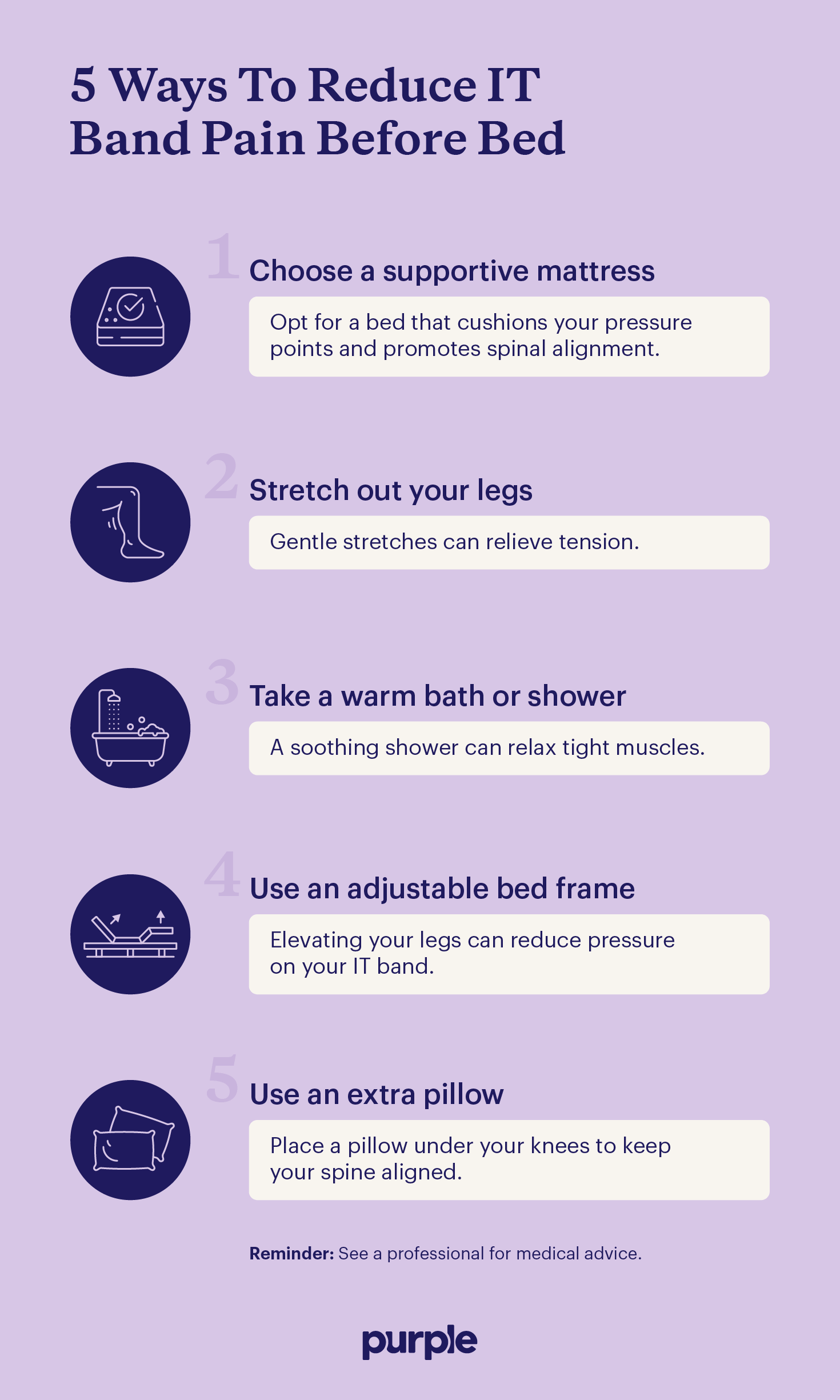
In addition to sleeping on your back to relieve IT band pain, there are additional steps you can take to get more painless shuteye. Let's dive into other options for reducing IT band pain, from stretching and taking a warm bath to ensuring proper pillow and mattress support. Of course, always speak to your medical professional before starting new treatments or stretches, especially if your pain persists or worsens.
Choose a Supportive Mattress To Align Your Spine
Keeping your spine in a neutral position is critical to reducing stress on your IT band and preventing further irritation. Choosing a supportive mattress that keeps your spine neutral can go a long way toward improving comfort. If your mattress is too firm, it may increase pressure on sensitive areas; if it is too soft, it can cause your hips to rotate inward.4 While there are ways to sleep with hip pain, taking preventative measures to avoid discomfort is often best.
For individuals experiencing discomfort related to body positioning, Purple Restore Hybrid Mattresses are designed to balance pressure relief and support more effectively than traditional memory foam. The GelFlex Grid® cradles pressure points while flexing to support your body’s natural alignment as you move throughout the night.
In a SleepScore Labs study, sleepers on a Purple mattress reported 63% less sleep-interfering pain6, helping promote more comfortable, uninterrupted rest compared to their original mattress. This combination of targeted pressure relief and responsive support can be especially beneficial for back sleepers managing IT band pain, as it helps reduce pressure buildup while supporting proper spinal alignment.
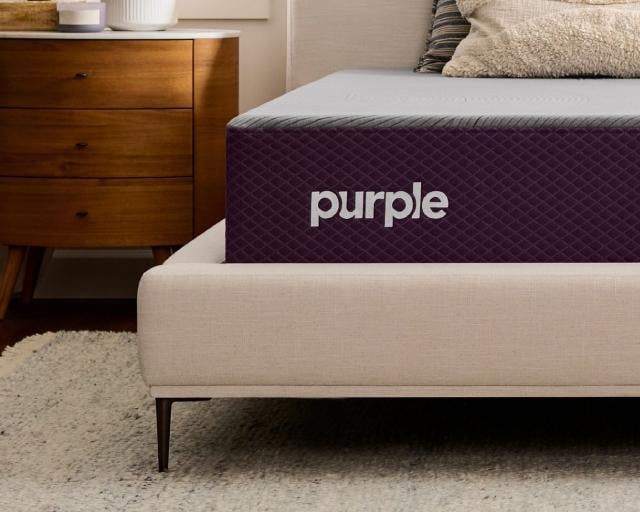
Purple Restore® Collection
Hybrids are great —but then there’s GelFlex Grid® Hybrids. Meet Purple’s bestselling collection.
Give Your Body a Few Good Stretches Before Bed
IT band discomfort is often linked to overuse and inflammation, and stretching may help your muscles release tension.3 Before heading to bed, consider a gentle stretch routine, be mindful to stop if you feel additional pain. One option is to lie on your back with your knees bent, crossing the impacted leg over your knee for a simple stretch. Then, gently pull the thigh of the bottom leg towards your chest, holding for up to 30 seconds.
Take a Warm Bath or Shower To Relax Your Muscles
Another gentle way to relax your muscles is to take a warm bath or shower. Avoid cold water at bedtime; the goal is to use warm water to aid muscle relaxation. If you choose to take a bath, consider adding Epsom salts for some added comfort (although evidence for their effectiveness is limited).
Use an Adjustable Bed Frame To Elevate Your Legs
You can easily adjust positions with the Purple Premium Smart Base via a mobile app or wired remote, reaching the perfect degree of leg elevation with the tap of a button. This base also features a Zero-Gravity bed position that reduces overall pressure and promotes healthy circulation.

Elevate Your Sleeping Experience
Relieve pressure and promote circulation with zero-gravity elevation.
Use an Extra Pillow for Additional Support
An extra pillow is a simple yet effective way to help relieve IT band pain; it can help to align your spine and hip, reducing pressure. Place a pillow of comfortable size under your knees while sleeping on your back to help obtain a more natural spinal position. If you must sleep on your side, you can place a pillow between your knees, like the Purple Harmony Anywhere™ Pillow, to prevent your leg from pulling on your hip.
Using a firm pillow that is thick enough to provide support is essential. The Purple Freeform™ Pillow, which provides a shapeable, moldable feel, allows you to adjust firmness and height to your exact liking. It also features a full wrap of Honeycomb GelFlex® Grid for added pressure relief and to promote a cool, comfortable sleep.
See a Medical Professional for Advice
With any health concern, it is best to consult a medical professional for more information. Persistent IT band pain may diminish one's quality of life and may contribute to further mobility limitations or related issues over time.3 If you are experiencing IT band pain, seek medical attention to prevent potential complications.
Find IT Band Pain Relief With a Supportive Mattress and Bedframe
Finding relief from IT band pain can be frustrating, but it isn't impossible. The best sleeping position for IT band pain is on your back, and it's a great start to relieving excessive pressure. To get the best sleep possible, turn to Purple for a supportive mattress that helps align your spine and promote recovery. An adjustable bed frame goes a step further, helping to elevate your legs and promote healthy circulation.
Find your ideal mattress and get a better night’s sleep with Purple.
FAQ
If you are experiencing IT band pain, optimizing your sleeping position is the most critical factor. Sleeping on your back may help reduce pressure, and elevating your legs offers additional relief. Before bed, consider gentle stretches and a warm bath or shower to help ease tension. Don't forget to contact a medical professional for further advice and to treat your IT band syndrome.
Calming an inflamed IT band involves relieving tension and pressure. Choosing sleeping positions that reduce pressure, such as on your back, can provide relief. Additionally, you should have a supportive mattress that is firm enough to keep your spine neutral. Adding a pillow underneath your knees can further reduce stress on your hips and IT band.
More To Exploew
Level up your sleep routine with our most-loved products.
-
Best neck supportSpecial offer
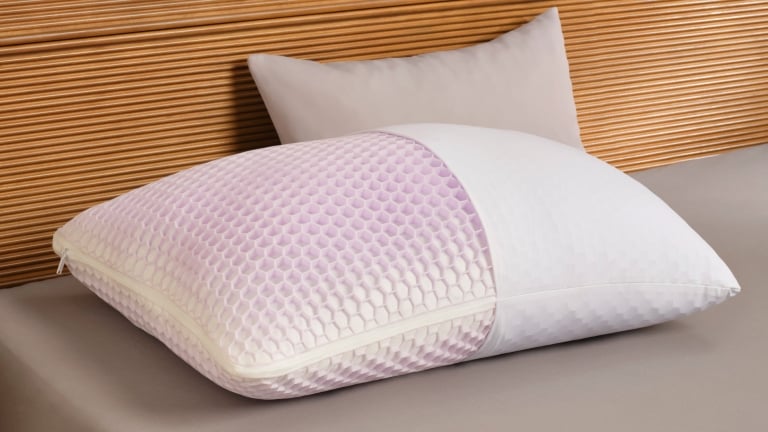
Purple Freeform™ Pillow
From Is dollars Is now dollarsShop Purple Freeform™ PillowAdjustable design for personalized comfort
-

Purple Premium Smart Base
From Is dollars Is now dollarsShop Purple Premium Smart BaseCustomized comfort + support, day + night
-
Instant pressure relief
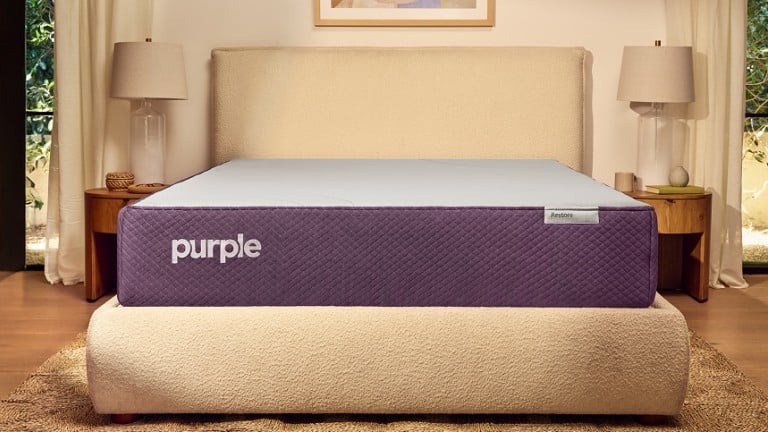
Restore® Hybrid Mattress
From Is dollars Is now dollarsShop Restore® Hybrid Mattress2" GelFlex Grid + coils for responsive support and increased breathability.
About the authors

Sydney brings more than five years of experience writing about a range of topics including health, lifestyle, and technology. They have a B.A. in Creative Writing and Literature from Lebanon Valley College. They’re a big fan of sharing dreams and discussing symbolism for fun. Sydney is always searching for tips to improve their sleep quality and hopes to help others get the best sleep possible with their writing.

Dr. Vanessa Hill, PhD is a sleep scientist and public educator whose research explores bedtime procrastination and the impact of technology on sleep. Published in leading journals and featured in major media, her research focuses on developing practical, behavior-based strategies to improve sleep and help people around the world rest better.

Tyler Wright is a Senior Product Manager of mattresses. With over 10 years of experience in product development, he is dedicated to developing innovative products that enhance and improve lives. At Purple that means building products that help people get the best sleep ever.
Sources
- Cleveland Clinic
- Bioengineering (Basel)
- WebMD
- Journal of Orthopaedics and Traumatology
- Journal of Orthopaedic & Sports Physical Therapy
- Average reduction reported in the impact of pain on sleep, as measured by the Chronic Pain Sleep Inventory (CPSI), while sleeping on a Purple Restore Collection mattress, SleepScore Labs, 2025.
Related Articles


-
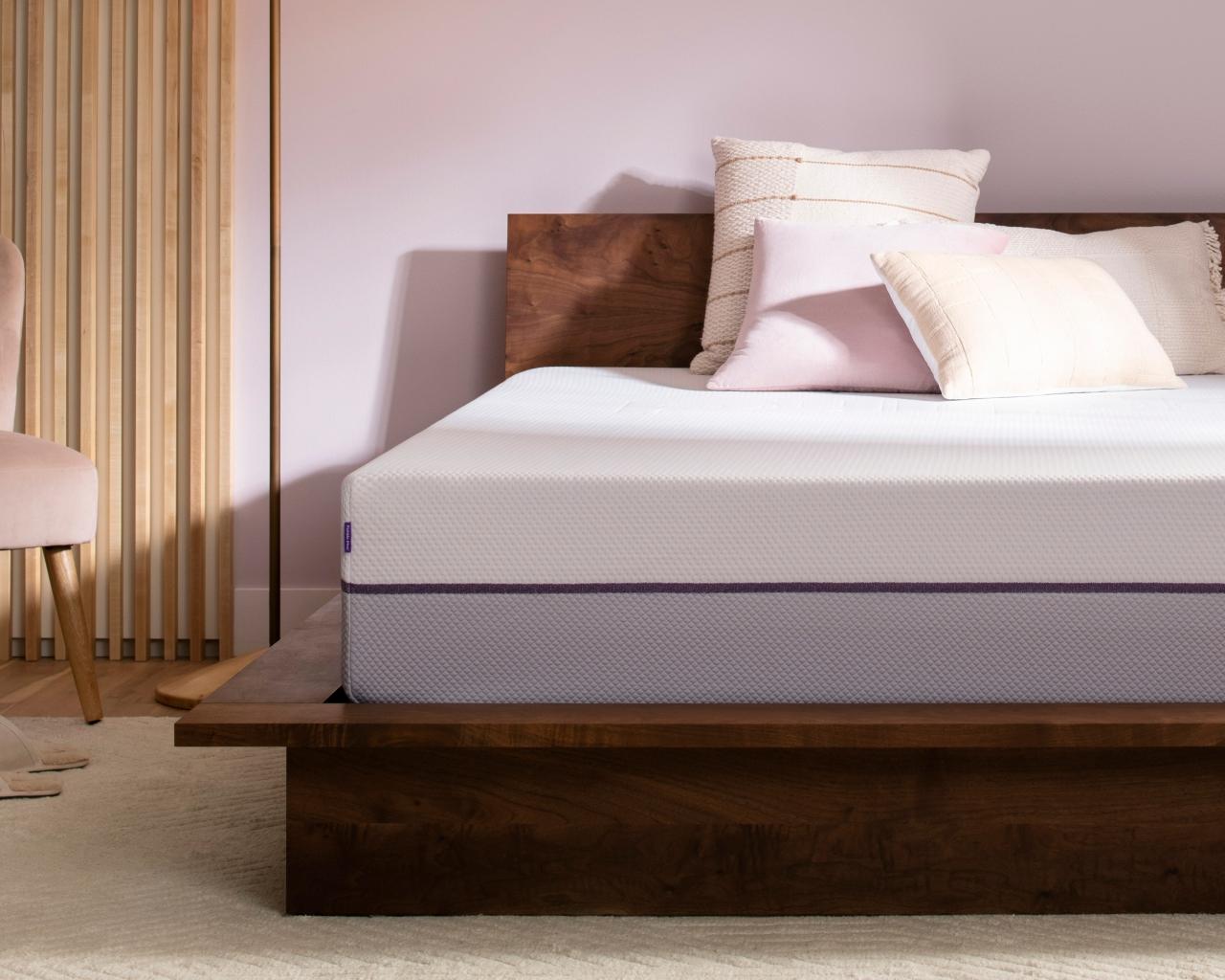 Purple Essential CollectionExperience the instantly adaptive GelFlex® Grid — at our best price.
Cradling comfort from the Purple GelFlex Grid
Easy, fast delivery
-
 Restore Hybrid CollectionStep up with a hybrid construction for enhanced pressure relief, support + up to 4x more cooling.*
GelFlex Grid + comfort layers for enhanced pressure relief
Maximum cooling — up to 4X cooler2 than competitors
Coil System provides responsive support
-
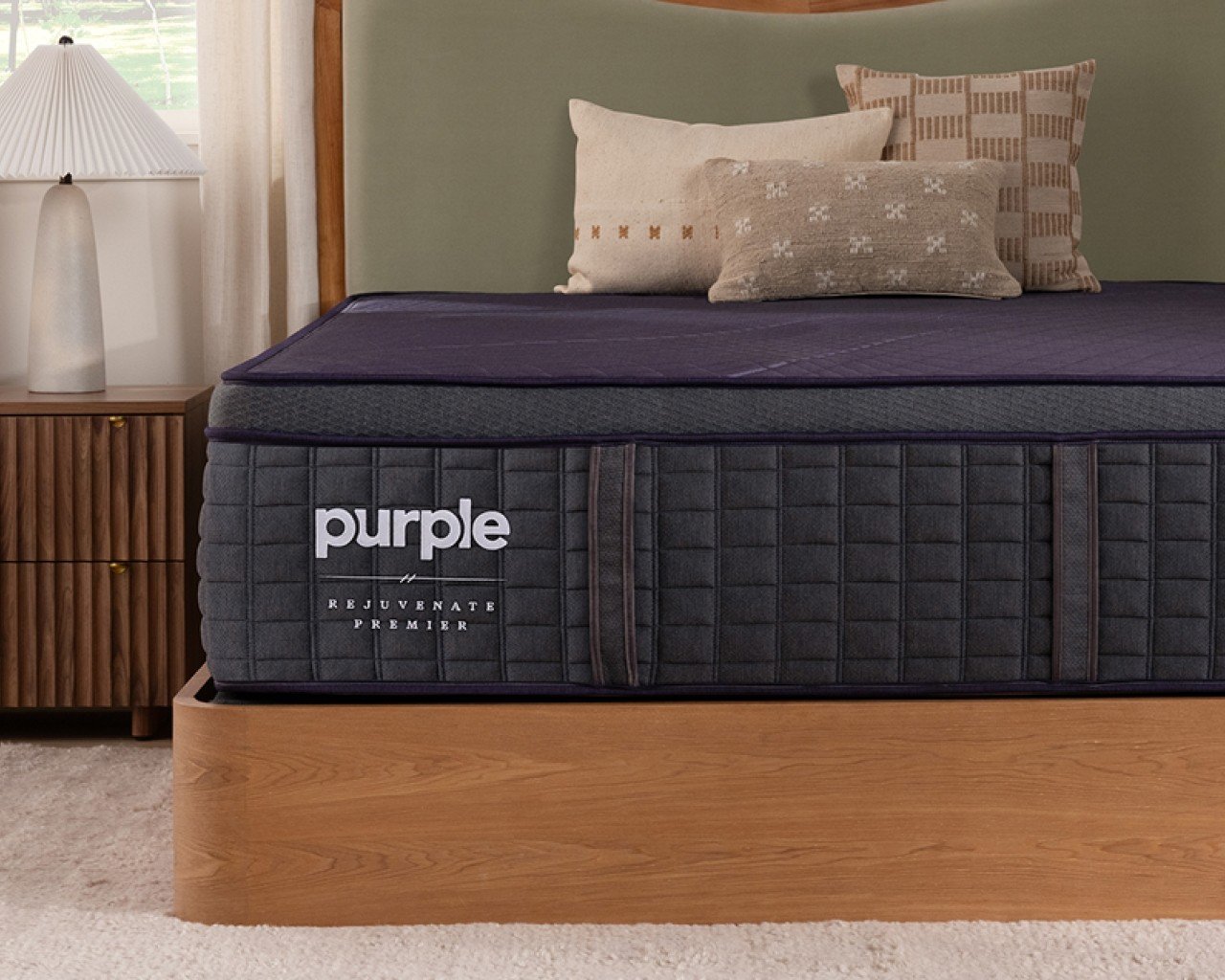 Rejuvenate Luxe CollectionQuilted Euro Top, enhanced comfort layers + hybrid construction offer maximum support.
All-new DreamLayer™ for soothing surface comfort
Layered Grid offers exceptional, full-body pressure relief
Adaptive Response Foam unlocks the Grid’s full comfort potential
Responsive coils maximize mattress cooling, longevity + stability


